ANALYSIS
From 6 April, the residents of North Berwick
could theoretically pay a different rate of
tax from those in Berwick-upon-Tweed,
which lies just south of the Scottish border.
However, this year there will be no
difference either side of the border, as
Scotland’s finance minister, John Swinney,
has decided to set the Scottish rate of
Income Tax at 10% for the fiscal year
2016/17. That partly reflects Scotland’s
limited room for fiscal manoeuvring
after the collapse in the oil price, but
Swinney has also indicated that he does
not intend to use the tax freedom until
Scotland is granted extra powers over its
own governance.
In future, though, the Scottish rate of
Income Tax could be set at any level. The only
stipulation is that the rate must be applied
to all three tax bands and will not be
INCOME TAX
SCOTTISH RATE OF INCOME TAX INTRODUCED
New rules will apply to those in residence, rather than by employment
applied to interest on savings or dividends.
While the rate may be unchanged, there
will still be an additional administrative
burden on an employer paying even one
member of staff in Scotland as they will
have to set up separate systems to handle
payments for these employees, identified
by an ‘S’ at the beginning of the tax code.
While HM Revenue and Customs will
continue to collect the tax, separate reporting
is needed so that the Scottish government
can identify the revenue generated from
the new tax.
Qualifying as a Scottish taxpayer
depends on residence; those with their main
residence in Scotland will be liable. There are
regulations to determine status for those with
a home in Scotland and elsewhere. Anyone
who is concerned about their status should
consult their St. James’s Place Partner.
news
THE INVESTOR
|
05
Gallery Stock, Getty Images
The near $4 trillion of global merger-and-
acquisition activity last year comfortably
surpassed the previous record of $3.66
trillion, which had been set in the heady
days of 2007, when the credit crunch was
barely even a blot on the horizon.
That partly reflects the fact that last year’s
deals included some record breakers: on
one Monday in November alone, three
acquisitions were valued at more than
$5 billion apiece
1
. Drug group Shire
Pharmaceuticals bought Ireland-based Dyax,
Visa Inc joined forces with Visa Europe, and
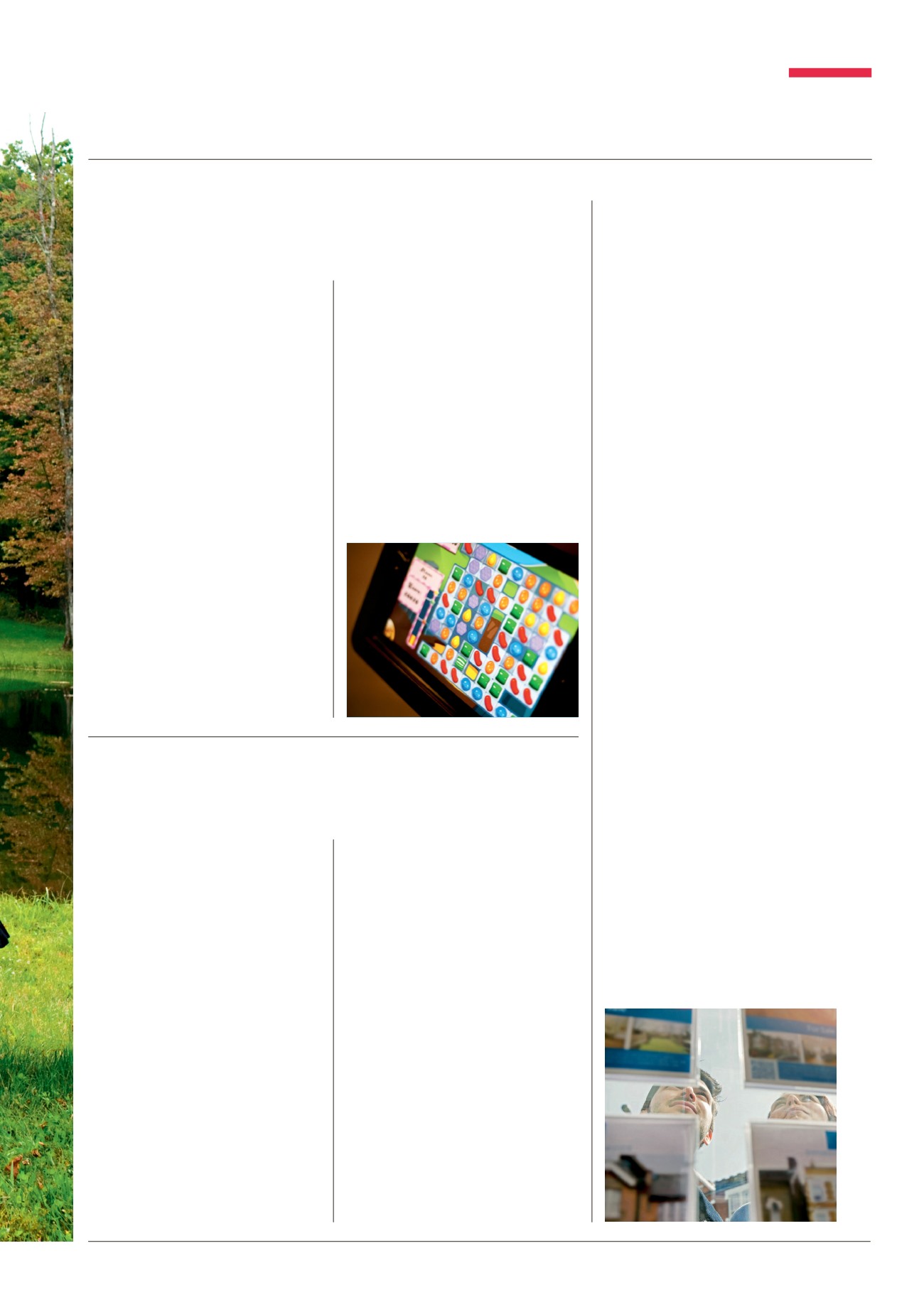
King Digital Entertainment – the company
behind the app-based Candy Crush game
– was taken over by US company Activision
Blizzard. The year also saw the launch
of the largest-ever brewery merger, between
SAB Miller and AB InBev, and the biggest-
ever pharmaceutical deal, between Pfizer
and Allergan.
One of the obvious reasons for the
increase in bid activity is the easy availability
M&As
GLOBAL M&A ACTIVITY EXCEEDS PRE-RECESSION LEVELS
Mega deals in mergers and acquisitions set new valuation records
of cheap finance. Companies are also being
spurred on by the lack of growth
opportunities, as the economy remains
sluggish and consumers are preoccupied
with paying their own debt. An acquisition
not only brings in a new source of sales,
it also gives the opportunity to shave costs
and therefore boost margins.
The excitement generated by deals,
and particularly large ones, should keep
investors interested.
1
/
Those struggling to buy their own home
may find the new Help-to-Buy ISA proves
helpful. Available only to first-time buyers
– defined as those who do not, and have
never, owned a home in the UK or
elsewhere in the world – the government
will add 25% to the savings pot when it is
used to buy a house.
The mechanics of the scheme are
straightforward. The new ISAs are available
from high-street banks and building societies
and can be opened with an initial deposit of
up to £1,200. Thereafter, the maximum
monthly saving is £200, which would qualify
for a £50 government bonus. That bonus is
paid when the ISA holder buys his or her first
house, on application by the conveyancer or
surveyor. The minimum bonus the government
will pay is £400, which would require
savings of £1,600, and the maximum is
£3,000, for which £12,000 must be saved.
Help-to-Buy ISAs are available to any
individual who qualifies, so couples can
open one each, doubling the potential
savings. While you are not permitted to hold
both a Cash and a Help-to-Buy ISA, you
can invest £2,400 in a Help-to-Buy ISA and
the balance (£13,840) can go into a Stocks
and Shares ISA. While savers do not have
to make deposits each month, the £200
monthly allowance cannot be carried
forward. Likewise, you cannot replace any
withdrawal, except by using the £200
monthly allowance. The generous
government top-up means that anyone
saving to buy his or her first home should
consider using the scheme.
PROPERTY
NEW HELP-TO-BUY ISA
s
Good news for first-time buyers


