I
n the nal quarter of 2013, markets
continued to be guided by central banks.
Janet Yellen was o cially nominated to
succeed Bernanke as Fed chair, appearing
to make‘lower for longer’ interest rates
ever more likely. In a surprise move, the
ECB cut its benchmark interest rate to
0.25%. Equity markets wrote new highs
in the US and held up well in most Asian
and European markets. Global bond yields
(intermediate maturities) traded mostly
higher since the beginning of the quarter,
with the exception of the European
periphery where spreads tightened in
the wake of continued ECB support
and a re nancing deal for Portugal. Late
November brought news of a temporary
accord between Iran and world powers to
limit its nuclear programme, which saw
energy commodities trade temporarily
lower.The portfolio has reduced its overall
sensitivity to interest rates, especially in
Brazil andAustralia. It remains positioned
to bene t from a steepening of the yield
curve, as PIMCO expects short-term rates
to stay low due to central bank activity.As
global central banks continue to employ
re ationary policies, we are comfortable
maintaining longer-termed in ation-
linked assets.We have slightly shifted
positions within our equity allocation but
left the overall exposure to emerging and
developed markets unchanged.
PIMCO
Multi Asset
Portfolio positioned to benefit from
a steepening yield curve
Equitymarketswrote
newhighs and global
bonds tradedhigher
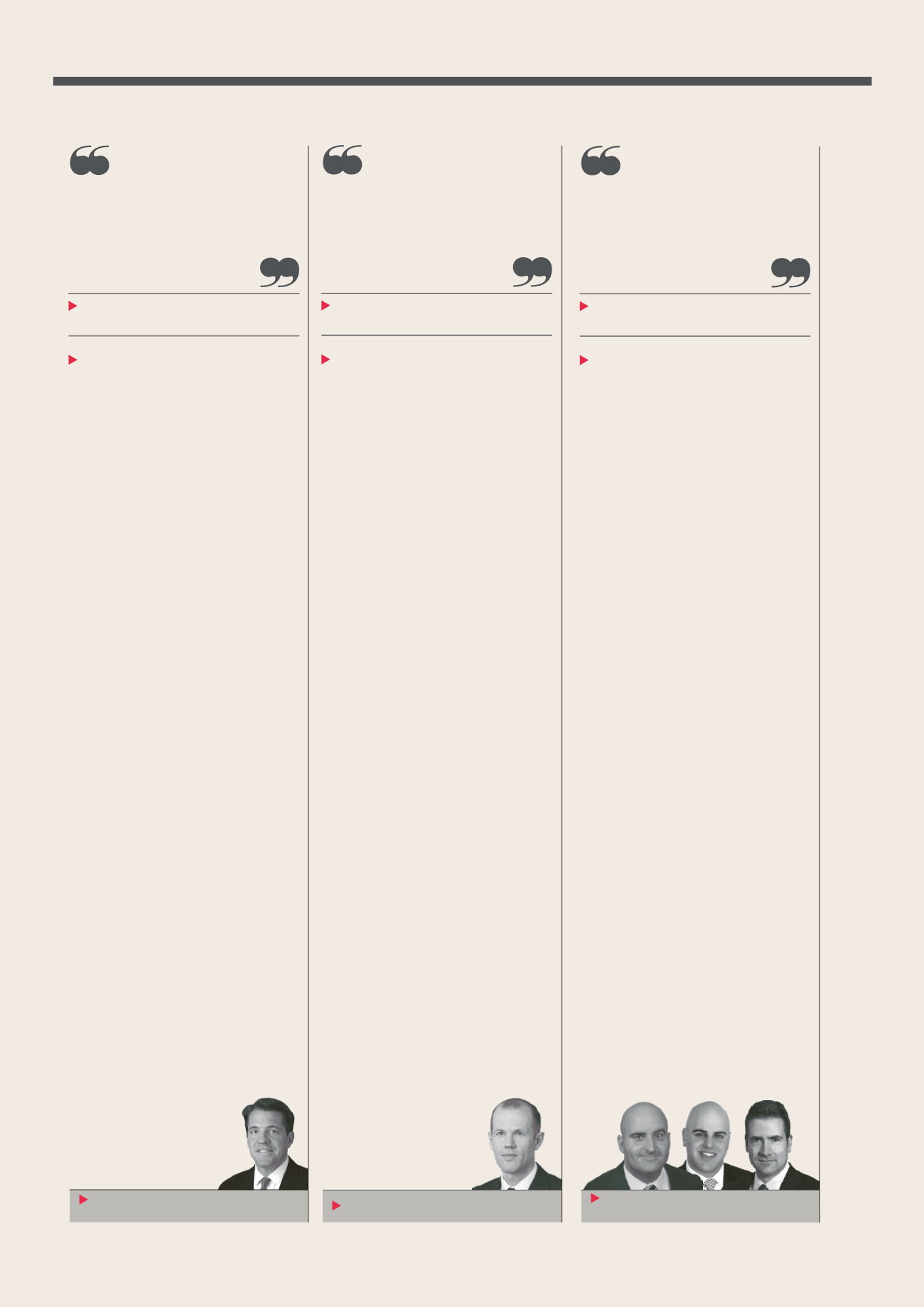
Curtis Mewbourne (above), Mohamed
El-Erian, Vineer Bhansali, Saumil Parikh
THE INVESTOR CENTRE
THE INVESTOR
|
35
S
tock markets have continued to make
progress over the past few months,
capping o another very good year for
equity investors.These gains came on top
of the strong rises seen in the second half of
last year and mean that the FTSEAll-Share
has given a total return of around 30% over
the past 18 months.The market’s rise has
been driven by the ultra-accommodating
actions of the world’s central banks and
signs that the UK economy is recovering.
We must be clear that the upward move
in stock markets has (up until now) not
been driven by improving corporate
fundamentals as pro ts expectations for
the large majority of companies continue
to be revised downwards.The big rise in
share prices when coupled with stagnant
pro ts has resulted in a large re-rating of
company valuations. It may be that share
prices are correctly anticipating that
corporate pro ts are about to improve, in
which case current valuations will likely
be sustainable.The risk, however, is that
a pro t recovery does not come through
as hoped, in which case some share prices
could be vulnerable.We prefer shares
where the valuations stack up on the
basis of today’s pro ts as here the risks of
disappointment are much reduced. Even
in today’s markets, these opportunities do
exist, although we should not pretend that
they are as widespread as they were.
Nick Purves
RWC
Equity Income
A good year for equities investors
as stock markets make gains
The big risk is that a
pro t recoverydoes
not come through
T
he overall global economic outlook
remains mixed.As managers of a
concentrated strategy, we take comfort
in our ability to be highly selective when
determining which business to include in
our portfolio. In the second half of 2013,
uncertainty over how emerging markets
might be impacted by external forces –
most notably expectations of tapering
by the US Federal Reserve – was on the
rise. However, we remain excited about
the select group of emerging markets,
businesses and countries to which we
are exposed.We are biased towards
companies bene ting from local growth
driven by demand and consumption at the
country level rather than export-related
growth. One such business is CPALL,
Thailand’s exclusive franchisee of the
7-Eleven brand.Thailand’s population is
expected to expand and incomes should
rise, particularly in the less developed
‘upcountry’; and as the operator of the
country’s dominant convenience store
brand, we think CPALL is well positioned
to bene t from these forces.We have
also been increasing our exposure to
India, both by initiating positions in new
companies and increasing the weights of
legacy holdings.Though the country came
dangerously close to crisis earlier in the
year, we think this threat is acting as a
catalyst; and today believe India is making
important structural changes that will
enable it to unlock its long-term potential.
SANDS CAPITAL
Satellite manager: Global Equity
Bias towards companies benefiting
from local growth in current climate
We remain excited
about a select group
of emergingmarkets
David Levanson, Sunil Thakor and
Perry Williams


