36
|
THE INVESTOR
THE INVESTOR CENTRE
W
e remain very optimistic on the
outlook for Europe. In particular,
we believe that the opportunity to invest in
more domestically orientated companies
is particularly striking. Many of the best-
quality international growth stocks are now
just too expensive, especially considering
a possible slowdown in emerging market
demand. Many domestic European
companies, on the other hand, are trading at
discounts to theirAmerican equivalents in
excess of 50%. More importantly, however,
our rm belief remains that the eurozone
economies are both scally stronger, and
more business competitive, than their
Anglo-Saxon counterparts. One need
only look at the modest growth in overall
eurozone government debt over the crisis,
or at the German trade account surplus, to
appreciate the strength of the region relative
to the US and UK.The main challenge for
the eurozone, of course, remains the trying
circumstances facing its periphery.We have
always argued that the‘will’ in Europe to
make the euro project work would ease the
process of necessary austerity and reform.
We have been very impressed by how
well the most-challenged countries have
managed both to meetTroika targets and
to undergo wholesale economic reform.
More importantly, it is evident that the
Spanish economy is beginning to recover and
surprisingly rapidly too. Critically, buyers
for distressed property assets are beginning
to appear in some numbers, especially on
Spain’s coast.
D
espite positive readings in quarter
three global manufacturing data,
we believe that global growth will likely
remain sluggish for the next several years.
In this environment, we are focused on
investing in established franchises with
secular unit-growth tailwinds, pricing
power and solid balance sheets that trade at
a substantial discount to intrinsic value.We
expect these businesses to grow their cash
earnings faster than the broad economy.The
US economy continues its slow recovery,
characterised by relatively weak demand
and a slow absorption of excess supply. The
continued rebound in residential housing, a
nascent construction recovery and domestic
energy investment should aid job creation
and capital spending. Internationally, we
see an in ection point between emerging
and developed markets. Many emerging
economies, the primary drivers of
global growth over the past decade, face
meaningful cyclical and liquidity headwinds
over the near term.Among developed
markets, though Europe is emerging
from its double-dip recession and Japan
will deliver outsize 2013 GDP growth
thanks to quantitative easing, we believe
both economies face structural challenges
to growth.The portfolio is invested in a
number of truly global franchises domiciled
in the UK, Europe and Switzerland but
deriving much of their growth from the
emerging markets consumer.
S. W. MITCHELL CAPITAL
Continental European
Joint manager: Greater European
and Greater European Progressive
Optimistic horizons in Europe but
big challenges on the periphery
SELECT EQUITY
Joint manager: Worldwide Managed and
Worldwide Opportunities
Sluggish outlook for global growth
despite some positive indicators
Eurozone economies
are stronger than the
US and theUK
We are focused
on investing in
established franchises
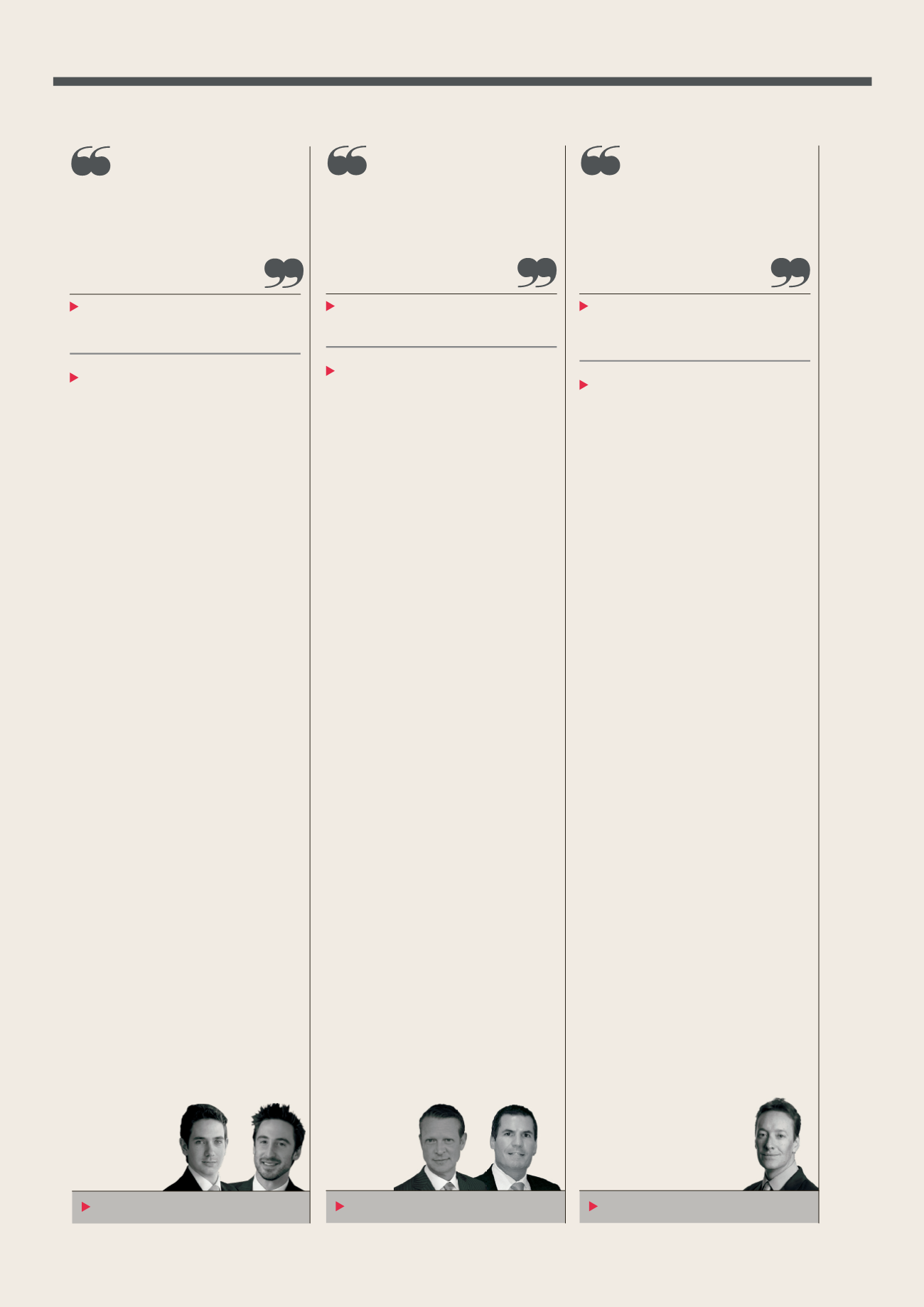
Stuart Mitchell
G
lobal equity markets made gains
last November, with investors
continuing to focus on monetary policy.
Developed market equities outperformed
emerging markets, which were hit by
fears, which proved justi ed, that the US
Federal Reserve could soon begin tapering
its asset purchases. US equities reached
record highs, helped by some better-
than-expected economic data, including
third-quarter GDP growth of 2.8%.The
European Central Bank cut interest rates
to 0.25% in response to below-target
in ation gures and signs of slowing
growth. Overall, this environment was
positive for equities and negative for bonds.
The returns of the portfolio’s equities
were mixed in November. US equities
delivered a positive return but returns
from UK, European and Paci c equities
were negative in absolute terms, although
the former fell only marginally.Within UK
equities, RBS was the largest detractor as
it faced regulatory pressures. Given the
bank’s improving nancial results and low
valuation, we believe the downswing will
prove temporary. PublisherTrinity Mirror
was the largest individual contributor to
returns on the back of a positive trading
update.The portfolio’s exposure to bonds
was negative in November. US government
bonds performed poorly as economic
growth improved.The weakening yen
was negative for returns on Japanese
government bonds.
Kevin Murphy and Nick Kirrage
SCHRODERS
Schroder Managed
Managed Growth
Equities make gains as investors
continue focus on monetary policy
Developedmarket
equities outperformed
emergingmarkets
George Loening and Chad Clark


