analysis
takeovers
Balance sheet
With the total value of worldwide mergers and acquisitions hitting
$1.8 trillion for the first half of the year, it seems that global giants are looking
to put the financial crisis firmly behind them.
an example of this. Or sometimes the target company is not as good
as expected, such as Hewlett-Packard’s purchase of Autonomy – a
deal that has been mired in acrimony and lawsuits ever since.And
while those who own shares in an acquired company normally get
paid a premium to the recent market price, the shareholders of the
acquiring company typically do less well. Between half and three-
quarters of bids are followed by a fall in the bidder’s share price; if
not immediately, then within a year to 18 months.And it is this that
prompts some critics to say that at least half of takeovers fail.
There is no easy answer as to whether bids are good or bad, but
an analysis by Deloitte a few years ago offers some interesting
pointers. It suggested that geography, size and sector were key
determinants of success or failure.Thus, a bid was most likely to
deliver value for the buyer if the target company was close by, if it
was much smaller than the company buying it and if it was in the
same sector.The more these constraints were stretched, the more
likely the takeover was to destroy value. Buying abroad, buying big,
or buying a business where you have little industry knowledge all
significantly increase the chance of failure.
1 Mergers & Acquisitions Review,Thomson Reuters
UK benefits from openness
British companies are more reliant on the stock market than their counterparts
in either France or Germany. On the continent, bank finance is the norm and
more businesses remain in family control, so there is less scope for unwelcome
takeovers. It follows that, when they do happen, they are met with suspicion,
and sometimes even seen as unnatural and unwelcome Anglo-American
piracy.The British, in contrast, have fewer misgivings and are more welcoming
than almost any other country.
The UK has certainly benefited from this openness. Jaguar Land Rover and
the BMW Mini show what enlightened foreign ownership and shrewd
investment can achieve, and they are by no means exceptions.
But there are concerns in government, as future prosperity is ever more
linked to intellectual property, innovation and knowledge-based industries, that
some of our best and most promising businesses are too easily snapped up by
foreign buyers and that the best of British technology and innovation is being
spirited abroad.
As of now, we still have claims to world excellence in pharmaceuticals,
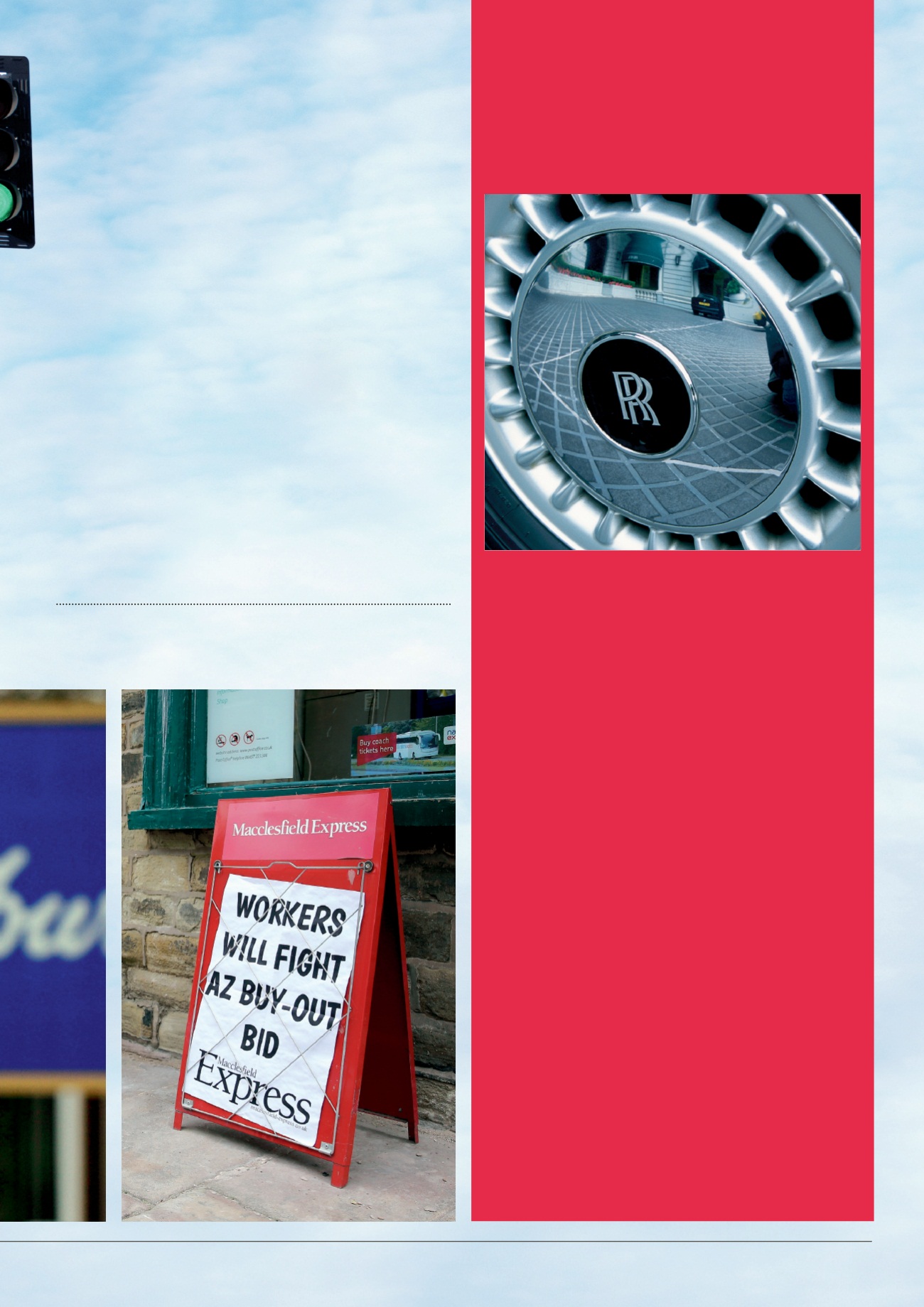
energy and computer sciences; and in some other sectors – Rolls-Royce in
aerospace and engines, for example. Recent rows with overseas companies
that do a lot of business here but pay little corporate tax have created an
uncomfortable feeling of powerlessness in political circles.The politicians’ gut
reaction is to take more interest in ownership, but while they can make a fuss
and express concern, they don’t have the power to intervene.
Perhaps this is why British politicians are a lot less disdainful than they
used to be about mainland Europe’s hostility to bids, and sometimes seem
even quietly envious of French politicians’ ability to repel unwanted foreign
companies purely on the grounds of nationalism. Hence the talks of a public
interest test for takeovers, which would give politicians the power to intervene
if they felt they had to.
What it really underlines is how the financial crisis has killed the cosy
assumption that markets know best. Politicians still pay lip service to the
principle, but not when it clashes with concerns about employment and how
Britain is going to pay its way in the globalised world, or how governments are
going to raise the tax revenues they need. Governments can rarely actually
stop bids, but they can make life very uncomfortable for aggressive bidders. No
board is likely to welcome that, but they might just have to get used to it.
Getty Images
THE INVESTOR
|
11


