T
he quarter began with volatility in equity
markets.After wavering throughout
October, developed markets ended the
month on a positive note, boosted by the
continuation of encouraging economic data
from the US and an unexpected injection of
liquidity into the Japanese economy.The US
Federal Reserve brought its programme of
quantitative easing to an end in October. Late
in October, the Bank of Japan announced
that it would increase its asset purchases
to a startling ¥80 trillion per year.As a
result, Japanese equities climbed as the yen
weakened. Political uncertainty persisted
in the Middle East and Ukraine. Brazilian
markets tumbled on the re-election of Dilma
Rousse , whose leadership is commonly
seen to be a detriment to the country’s
economy. InWestAfrica and beyond, the
Ebola virus bred fear, with many nations
seeking to contain the disease.Most equity
markets rose during November, with Europe
and the US making strong gains. In the last
week of the month it was announced that US
GDP had grown by 3.9% in the third quarter
on an annualised basis. Subsequently, this has
been revised upwards to 5%.Meanwhile,
the decline in the price of oil began to have
a signi cant economic impact. During the
fourth quarter through to 12 December,
developed equity markets were 0.36% ahead
of emerging equity markets, which are down
4.43% in US dollar terms.
G
ilt yields rallied (prices fell) sharply in
mid-October’s volatility, fell back and
then rallied again through November and
early December.The benchmark 10-year gilt
yield reached an 18-month low of 1.85%
(on 11 December) as growing concerns
over external weakness o set generally
robust domestic macro indicators.The Bank
of England’s Monetary Policy Committee
maintained its 7–2 voting pattern in favour
of keeping interest rates on hold, prompted
by persistently low in ation. Governor
Mark Carney reiterated in a dovish In ation
Report that when UK rates start to rise they
are‘expected to do so only gradually and to
remain below average historical levels for
some time to come’. He also emphasised
that the path of monetary tightening remains
data-dependent, with the primary area of
concern shifting fromweak wage growth to
weakness in Europe.The main change to the
Bank’s near-term outlook was‘materially
lower’ in ation expectations. RPI in ation
arrested its downward trend to level out at
2.3%.The 10-year breakeven rate spiked
higher in December but then fell back
aggressively to maintain its downward trend.
Meanwhile, slack in the economy continues
to be absorbed, with the unemployment
rate falling to 6%, its lowest since late
2008.There was muted reaction to the
Autumn Statement, with one of its more
noteworthy proposals being the nal
repayment of outstanding debt relating to
the FirstWorldWar.
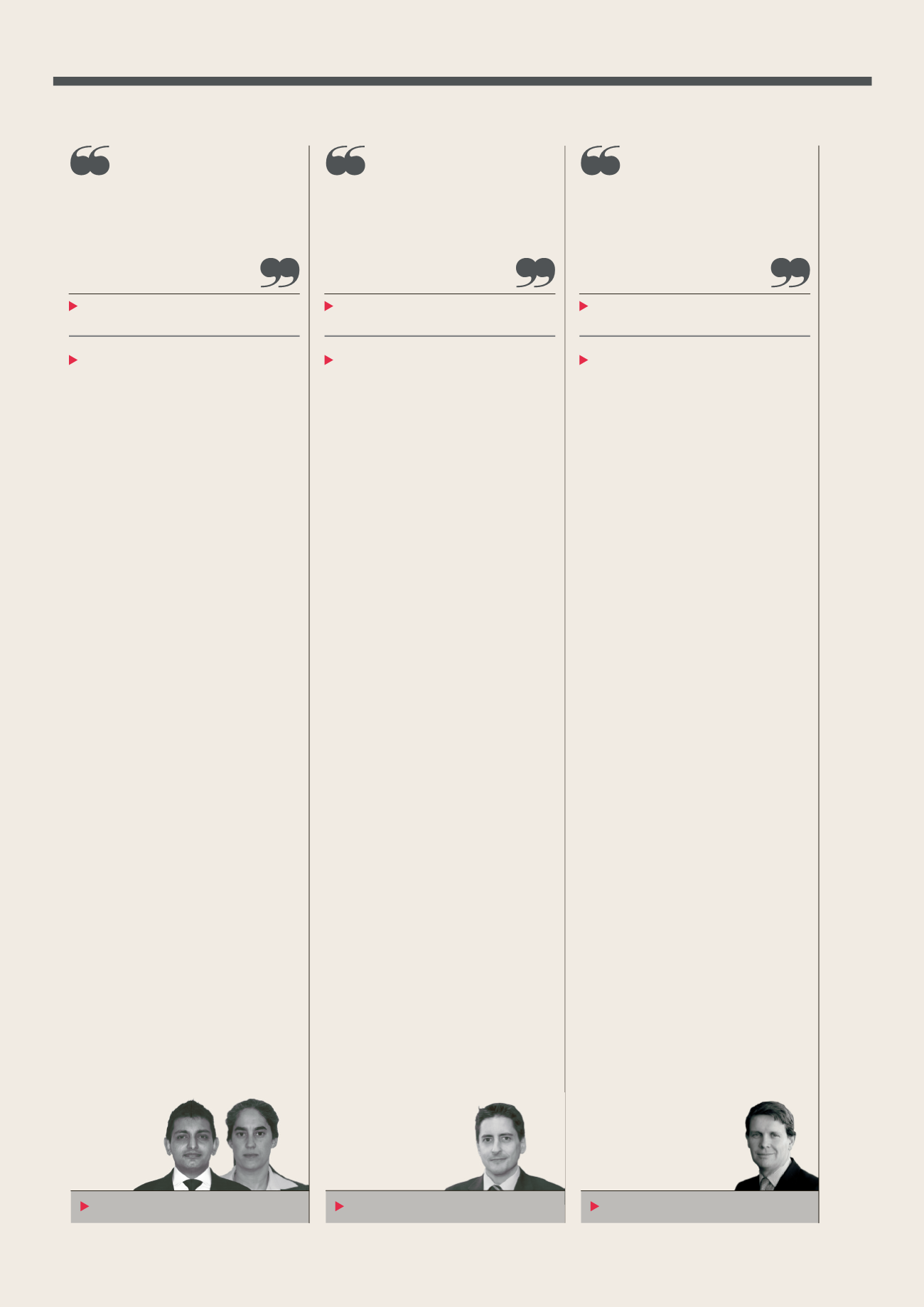
Nimish Patel and Eleanor de Freitas
THE INVESTOR CENTRE
THE INVESTOR
|
29
BLACKROCK
Core manager: Global Equity
Encouraging US economic data helps
boost developed markets
BLACKROCK
Index Linked Gilts
Governor Mark Carney reiterates
dovish policy towards interest rates
InWest Africa and
beyond, the Ebola
virus bred fear
RPI in ation arrested
its downward trend to
level out at 2.3%
Francis Rayner
W
ithin the portfolio relative
performance was strong, with a
number of companies providing positive
contributions including Reed Elsevier,
Wolseley, Compass, Johnson Matthey,
Berkeley Group and BritishAmerican
Tobacco.The common factor linking these
companies is that they have met or exceeded
investor expectations for earnings growth
at a time when global economic growth
remains modest. Reed Elsevier, for example,
reiterated its outlook, improving returns
and cash ow and the near completion of a
£600 million share buyback.The fall in the
oil price bene ted relative performance in
two ways, rstly via easyJet through reduced
fuel costs, with the group continuing to
gain market share, and also from the overall
underweight exposure to the oil and gas
sector, where the impact from holding BG
Group was more than o set by not holding
BP or Royal Dutch Shell.The main detractor
was Standard Chartered, which announced
disappointing earnings as the bank continued
to experience greater competition in local
markets and a rise in loan impairments.
Equity markets have re-rated higher over the
past couple of years and we expect in ation
expectations and global economic growth to
remain muted.We believe this environment
is suited to our strategy of investing for
the long term through a concentrated but
economically diversi ed portfolio of best
ideas that aims to identify high-quality
companies exposed to areas of growth.
BLACKROCK
UK & General Progressive
Number of companies exceed
expectations for earnings growth
This environment is
suited to investing
for the long term
Luke Chappell


