THE INVESTOR
|
15
Anthony Hilton
is the financial editor of the
Evening
Standard
and former editor of
Accountancy Age
. He has
worked for
The Observer
, the
Daily Mail
and the
Sunday
Express
, and was business correspondent for the
Sunday
Times
in New York for three years.
which would see their solvency positions
dramatically improved because their
actuaries would be able to sign o on higher
future returns on their existing assets.
That would lift a nancial millstone from
companies and leave them with more cash
to invest and grow.And at an individual
level higher rates would feed through
immediately into higher annuity rates,
which could make a big di erence in the
future living standards of those with private
pensions who are soon to retire.
Above all, investors around the world
would be able to go back to making
decisions on what they see as the merits
of an investment – rather than trying to
second-guess the thinking and actions of
central bankers (which is, of course, what
ANALYSIS
Central bankers
understand the risks
of moving too fast
near historic levels – if there is going to be
an earthquake we can take comfort from it
being a small one.
It’s a shrewd strategy. Markets don’t like
uncertainty but the interest rate outlook is
no longer really uncertain.True, we don’t
know precisely when rates will go up, but
having been softened up for so long, surely
no one could claim it has come as a surprise
when it does happen. It is perfectly rational
to make investment decisions now which
position portfolios for the rate moves we
all expect in the coming months.This is
particularly the case in bond markets, where
rising interest rates unavoidably result in
a fall in capital values.
There will be pain elsewhere, too.
Household incomes have been squeezed for
a long time and, for some, an increase in
mortgage rates will be hard to take. Likewise,
some companies which would otherwise have
gone bust, have been kept a oat by cheap
loans – as shown by historically low levels of
bankruptcy.They will nd it much tougher in
normal times.
But the fear of dislocation should not stop
us from welcoming a world in which interest
rates are no longer arti cially low. Savers
have borne the cost of the global nancial
crisis for far too long and have had to endure
wafer-thin returns.A rate rise would be
even more bene cial for pension schemes,
investors should always do).The interest
rate is the market price for money; market
prices determine the allocation of resources.
We have lived for seven years with a
fundamental distortion of the economic
price mechanism; and even if we have
grown used to it we should not forget that
it is a distortion – and ‘normal’ is what we
should strive for. Indeed, though there may
be casualties and noise in the markets, we
should remember the words of US president
Franklin D Roosevelt in the 1930s that ‘the
only thing we have to fear is fear itself’.
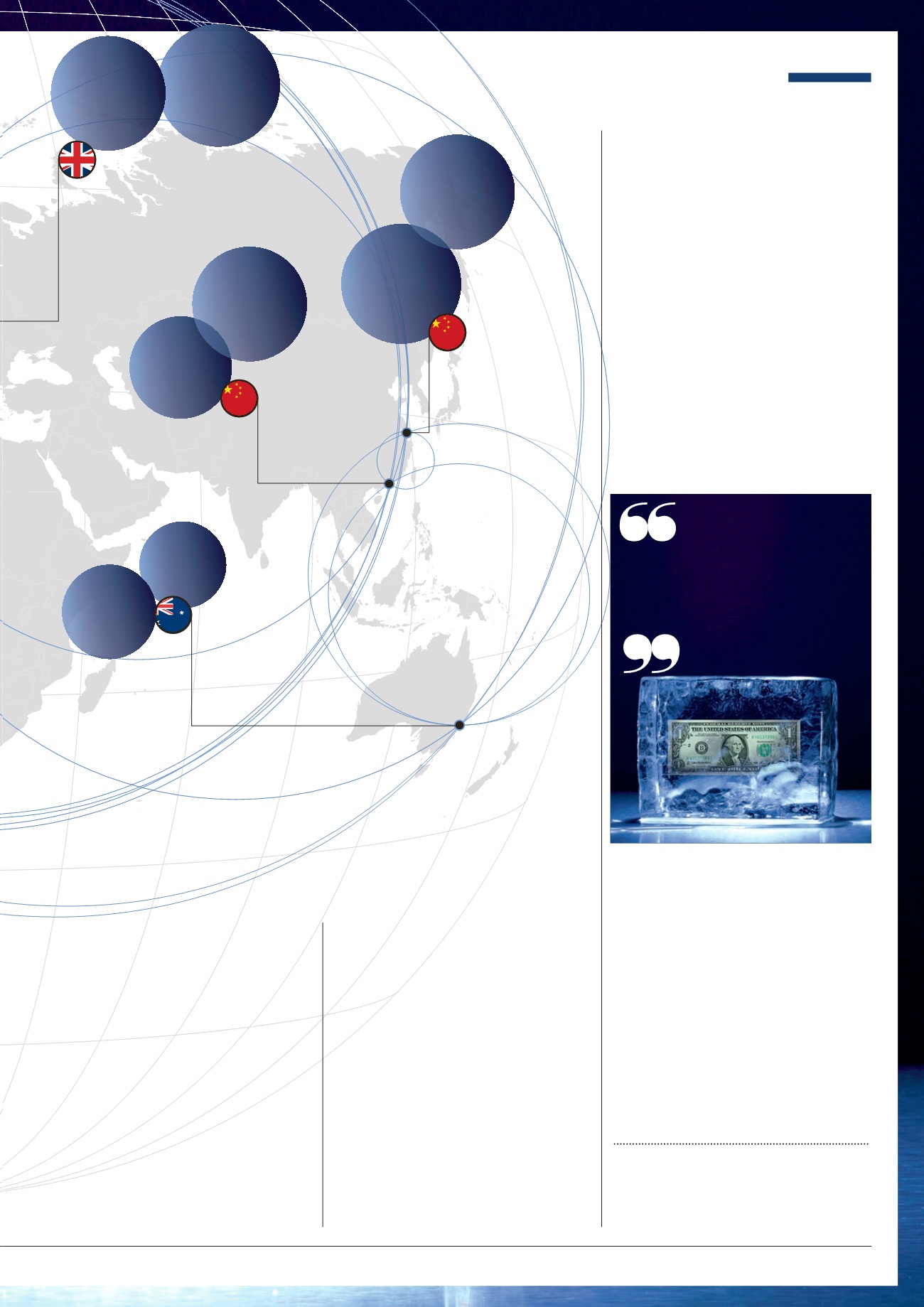
£4.36trn
market
capitalisation
Stock exchange
in the UK and
the largest
in Europe
LONDON STOCK
EXCHANGE
AUSTRALIAN
SECURITIES EXCHANGE
listed companies
and issuers
2,200
AUS
$1.5trn
market
capitalisation
$4.4trn
market
capitalisation
SHENZHEN
STOCK EXCHANGE
$5.9trn
market
capitalisation
SHANGHAI
STOCK EXCHANGE
Shenzhen is
the world’s
best-performing
market
this year
Topped the
5,000
level in early June
for the first time in
seven years


