40
|
THE INVESTOR
THE INVESTOR CENTRE
All information correct as at 31 December 2015
I
t has been di cult, as a stock-picker, to
link together the‘China panic’ inAugust
and September with what we have heard
from our numerous company visits on the
ground.Whilst we have been acutely aware
of a slowdown in the Chinese economy for
the past two years, we haven’t observed any
real evidence that the deterioration has begun
to dangerously accelerate.We should also
remind ourselves, furthermore, that China
only accounts for 4% of eurozone exports.
The UK and US are much more important
trading partners, making up 7% of eurozone
exports each.We sold most of our China-
exposed investments as far back as 2012,
believing that the market had overly
optimistic growth expectations.
The eurozone, furthermore, moves ever
closer to normalisation.Many investors have
struggled to accept how deeply companies
and governments have restructured at the
periphery of Europe. Just look, for example,
at the 40% reduction in costs that IAG
achieved at Iberia.At the same time, German
wage growth is beginning to accelerate quite
quickly. In fact, a signi cant proportion of
peripheral Europe’s productivity gap with
Germany has now been eliminated.
The market remains compellingly
valued with more domestically orientated
companies trading at, in many cases, a 50%
discount to their counterparts in the US.
S. W. MITCHELL CAPITAL
Continental European
Joint manager: Greater European
and Greater European Progressive
European market remains
compellingly priced compared to US
Europemoves closer
tonormalisation ledby
Germanwage growth
P
rospects for global GDP growth are
more precarious than six months ago.
Recent market downswings appear to re ect
little of the bene t that consumers will
eventually enjoy from lower energy prices.
In the US, we had predicted an acceleration
in the economy due to continued strength
in residential housing, a pick-up in public
and private non-residential construction
and an industrial renaissance.The industrial
renaissance failed to materialise because of
the oil and gas bust and the impact of US
dollar strength on exporters of industrial
equipment.The US non-manufacturing
economy, meanwhile, remains good.
The European economy continues
to recover, with welcome growth from
peripheral countries such as Spain. However,
the fragility of the recovery was underlined
this month by the European Central Bank’s
decision to extend quantitative easing by six
months to March 2017.As for China, $3.5
trillion in reserves is more than enough to
prevent economic collapse, but the country’s
imbalances will take years to correct.
Nevertheless, the fact that China has started
down this important but di cult path to
transition to a consumer-driven economy
bodes well for the long term.
As ever, we strive to own great businesses,
those that make their own luck by executing
strategies that lead to above-average growth
and pro tability over a number of years,
if not decades, and through a variety of
economic climates.
SELECT EQUITY
Joint manager: Worldwide Managed
and Worldwide Opportunities
China’s move to consumer-driven
economy should pay off in long term
GDP growth indoubt
asworld economy
faces headwinds
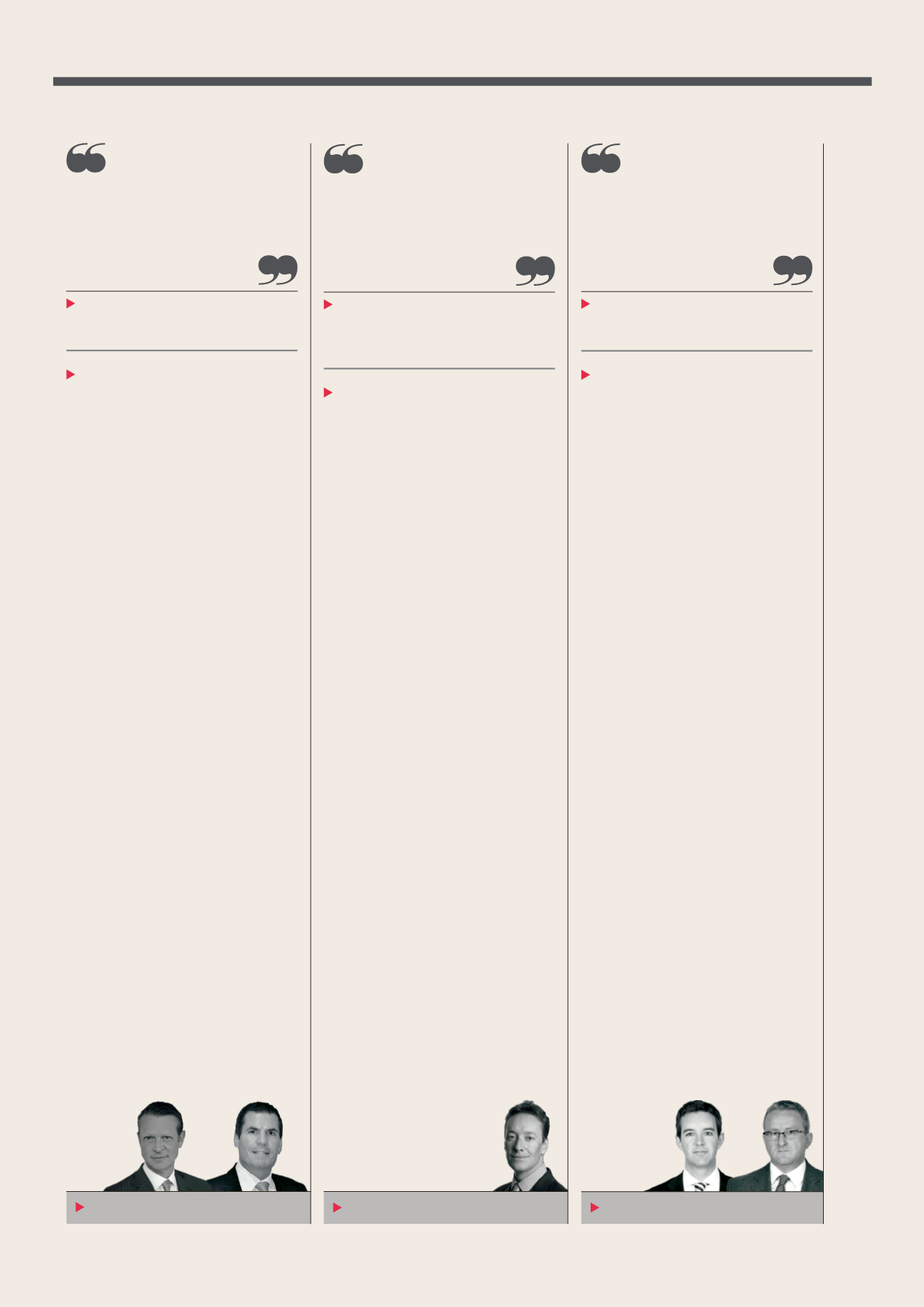
Stuart Mitchell
George Loening and Chad Clark
F
ollowing a rebound in sentiment in
October, the timing of the launch of the
strategy in early November saw the team
keep portfolio risk relatively low, maintaining
a relatively high cash balance, and low credit
spread, raising peripheral sovereign exposure
and taking an allocation in US Treasury
In ation-Protected Securities (TIPS).This
latter opportunity was a tactical decision
before the Federal Reserve’s decision to hike
interest rates. BuyingTIPS after the rate rise
would be too late as prices will likely rise and
the entry point become less attractive.
Likewise, we have been particularly
discerning on bond selection and have
not rushed to populate the portfolio, in
anticipation of end-of-year stress and the
increased possibility of sourcing quality assets
at attractive levels.We have generally targeted
shorter-dated bonds as the market continues
to exhibit a degree of vulnerability.
Concerns regarding US high-yield bonds
have been well agged and despite European
high yield being driven by very di erent
factors, we have been wary of short-term
contagion. For this reason, the high-yield
allocation has been lighter than originally
anticipated and entirely European-focused.
We believe that the current portfolio
construction should provide positive returns
over the next fewmonths, as the market
copes with the (probable) transition to a
more hawkish US monetary policy, and
the dilemma of a further divergence of the
European Central Bank policy path.
TWENTYFOUR
Joint manager: Diversified Bond and
Strategic Income
Portfolio designed to cope with
likely hawkish US monetary policy
No rush topopulate
portfolio in face of year-
endmarket volatility
Eoin Walsh and Gary Kirk


