



 25 / 44

That is a difficult backdrop, as the
EU needs to transition from the
legacy of the financial crisis to an
economically stronger, more stable
basis, whose institutions can better
cope with changes in economic
circumstances. Political uncertainty
could affect foreign direct investment
and domestic investment.
THE INVESTOR
|
25
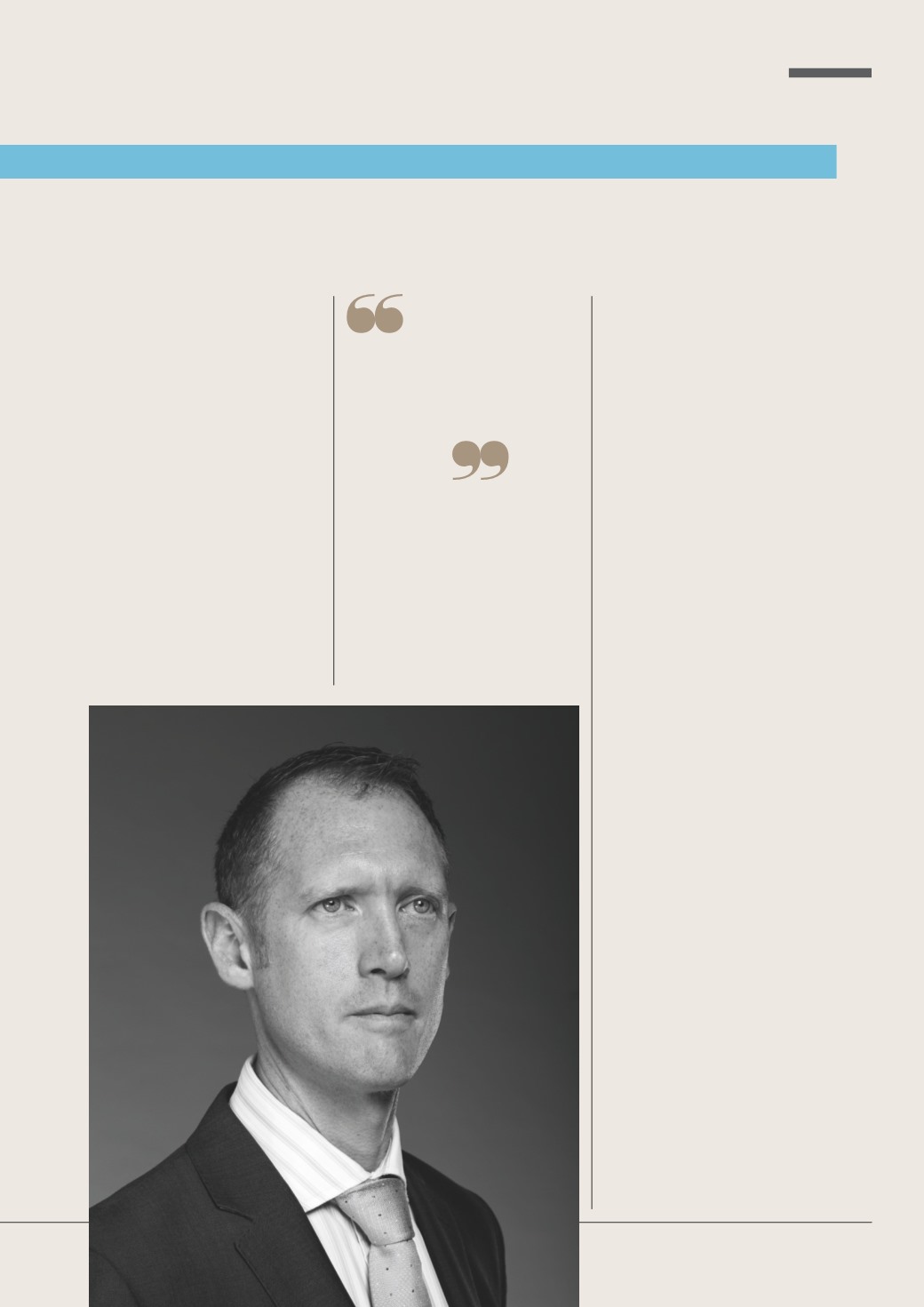
Matt Writtle
What are theeconomic
implicationsof the US election?
A Hillary Clinton victory would be
seen as maintaining the status quo.
Some of her policies, such as her
infrastructure package, could provide
a modest boost to the economy but
there is a question over howmuch she
could get through Congress.A Donald
Trump victory could have more of an
impact, although his economic policies
are evolving and he is rolling back
from the ambitious fiscal package of
a fewmonths ago. His proposal for tax
cuts for corporates could boost GDP
but it will not be transformational.
Arewe reaching theendof the
road for stimulating growth?
Not yet, but we are getting to the
point where that is conceivable – and
this is the first time we have had to
consider that prospect. JanetYellen
(Chair of the US Federal Reserve)
talked at the Jackson Hole summit of
central bankers in the summer about
the tools which the Federal Reserve
has left. She believes that if it is
starting from a normalised economic
position, the Fed has an unconstrained
toolkit. But if starting from the
position we are in now, central banks
are more constrained.The Federal
Reserve is one of the only central
banks which has tightened policy so
it has the most ammunition left.Those
which have not yet tightened, like the
European Central Bank and the Bank
of Japan, could find the policy tools
available to them are limited. In fact,
the Bank of Japan employed an
aggressive monetary stimulus over
the past few years but now fiscal
stimulus is seen as necessary too.
INTERVIEW
With referendums inHungary,
Austriaand Italy in thecoming
months andelections in
France andGermanynext
year, doespolitical riskpose
a threat to the integrityof the
EUand theeurozone?
The dynamics which have driven the
UK to leave the EU are not likely to
be reflected in the polls across the
eurozone but there will be a drive to
more populist politics.That could
make it more difficult for the EU to
enact policies which have been good
for growth, such as openness to foreign
capital and labour. These policies have
been characterised as having added
to inequality, so could be resisted by
those who feel they have been left out.
We expect a
slowdown in 2017
and 2018, then
a pick-up
Asset allocation as at 31 March 2016