


 38 / 40

di erent aims than a company simply
seeking to survive, compete and grow.
Instead, company priorities may include
increasing employment or national
GDP growth, or even enabling
corrupt practices.
Finegan’s conservatismmeans that
balance sheet sustainability is an
important part of his thinking. It was the
di erentiating factor when he was
evaluating Shoprite, a SouthAfrican
supermarket operator, and BhartiAirtel,
an Indian telecoms company, who have
INSIGHTS
38
|
THE INVESTOR
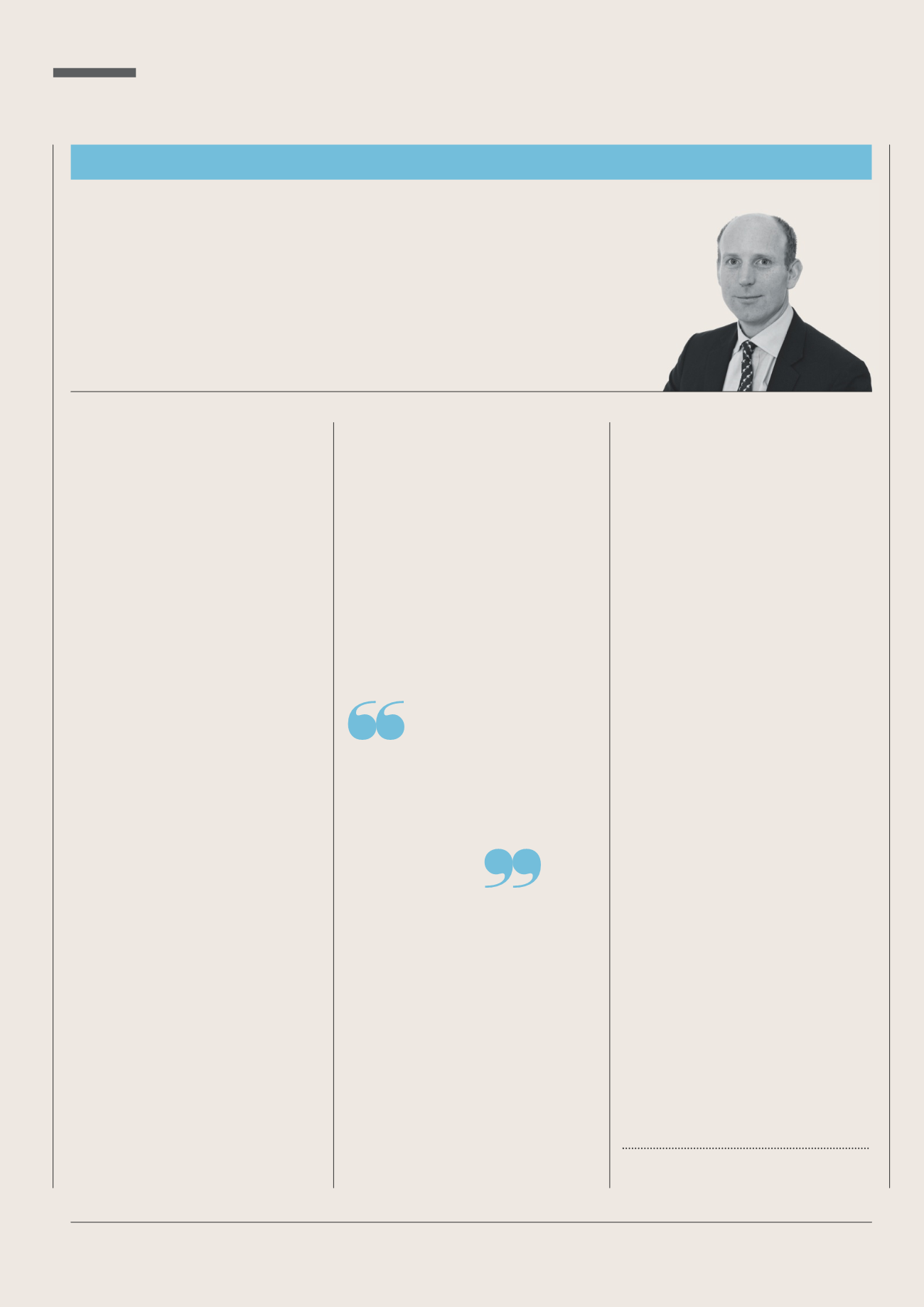
Glen Finegan of Henderson Global Investors
believes emerging markets pose specific risks to
investors – and knowing local practices is key
Most of the
companies we look
at have a controlling
shareholder
THE INVESTOR CENTRE
E
quity investors can have a
reputation for bullishness,
and all the more so when
their focus is emerging
markets. But Glen Finegan
is keener to emphasise the challenges.
“You win in emerging markets by not
losing,” says Finegan. “Go in with your
eyes open.There are risks everywhere.”
Manager of the St. James’s Place
Global Emerging Markets fund, Finegan
argues that emerging markets come
with their own problems.Many of the
usual rules (and laws) do not apply.
“Most of the companies we look at
have a controlling shareholder,” says
Finegan. “If they wish to prevent us
bene ting from the success of their
business, there is little we can do – for
example, going to court in Moscow
against an oligarch is very di cult.”
While population sizes in developed
countries have largely stagnated, numbers
in developing markets are still rising, and
are forecast to continue doing so over the
next three decades. But he thinks
emerging market indices are misleading,
since they re ect the weighting of the
companies within them– and the biggest
are often too politicised to operate as
ordinary companies.
“Many of these enterprises are not
really businesses at all,” says Finegan.
“A Chinese state-controlled bank is an
extension of the Ministry of Finance.”
Such companies are often run by
bureaucrats and their direction re ects
Emergingexpertise
about how they’ve been delivered,” says
Finegan. “I’d prefer a company with a
good record that’s been delivered in a
conservative manner.Many companies
in the portfolio don’t have any debt.”
Indeed, debt can be a particular
problem for companies in emerging
markets. The Nigerian naira began life at
parity with the dollar in 1973, but today
you need over 300 naira to buy $1.
“If you invest in a company in Nigeria,
you want to be certain its cash ows
will increase faster than in ation,” says
Finegan. “Fortunately there are some
[companies like that]. Heineken’s
subsidiary, Nigeria Breweries, owns the
strongest brewery in Nigeria. Its strong
brand has given it pricing power.”
Finegan spends a great deal of time
looking at a company’s controlling
shareholders, whether that’s a family,
founder or entrepreneur. He’ll study
how they’ve treated both shareholders
and other stakeholders in the business.
In these areas, he argues, virtue can
often signal a healthy sensitivity to risk.
“Do they try to avoid paying tax?
Are they content with their operations
polluting the drinking water for other
communities? Have they got a poor social
or environmental record?” he says.
“We can infer something about the
riskiness of the business if they don’t take
those issues seriously.”
both invested signi cantly in new
African markets.
“Shoprite has executed a risky
strategy in a conservative fashion – it’s
never geared its balance sheet,” says
Finegan. “Contrast that with Bharti
Airtel inAfrica, which borrowed in
US dollars and su ered as a result.”
In evaluating individual companies,
Finegan sets great store by its culture and
he spends longer studying a company’s
history than forecasting its future.
“We like companies with strong
nancial track records, but we care
This was originally published on Insights, available
via Partners’ websites or at www.sjpinsights.co.uk