



 38 / 40

borrowing.The financial crash and
subsequent sharp recession left many
of these companies exposed. In many
cases management teams were able to
repair balance sheets through equity
fund raisings, but some failed to survive.
I still bear those scars and this has been
reflected in my subsequent evaluation
of companies’ prospects.
One of the great pleasures of my job
is holding a company over time as it
grows in size, scale and, hopefully, share
price. Hilton Foods is a good example,
growing substantially both in the UK
and abroad without recourse to
shareholders.The company is a trusted
partner to some of the leading food
retailers around the world and has a
well-established growth plan. Benefiting
from these long-term success stories
requires patience. IQE, a semiconductor
specialist, is a prime example; the
company’s shares were lower at the time
of the Brexit referendum than back in
2007.They have since soared, after it
became clear that IQE technology is a
INSIGHTS
38
|
THE INVESTOR
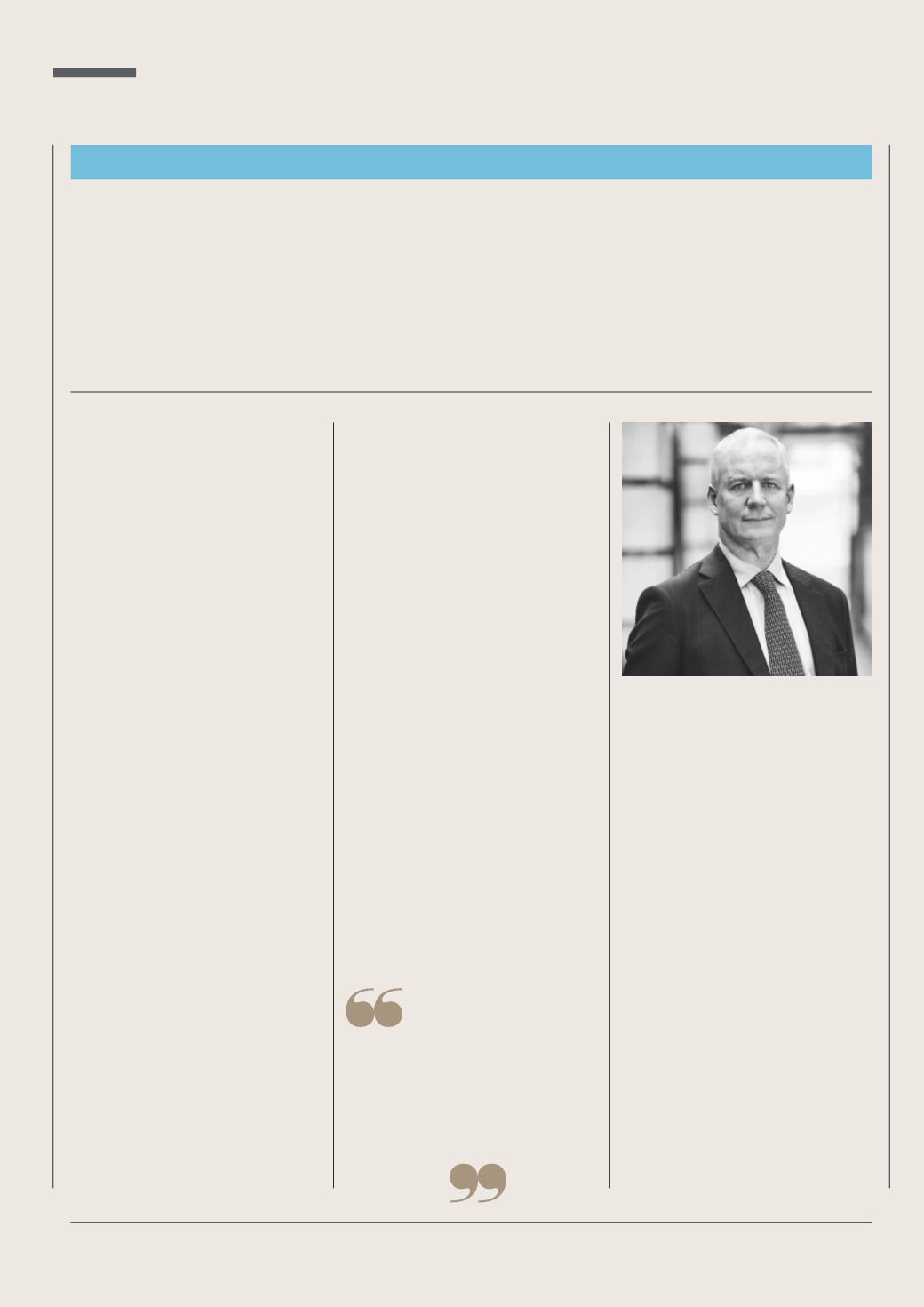
George Luckraft of AXA Investment Managers reflects
on a decade working in the investment markets
THE INVESTOR CENTRE
I
have had the privilege of
running theAllshare Income
UnitTrust for St. James’s Place
for the past 10 years. It has been
a decade marked by huge
uncertainty and change,
reflected in significant investment
market volatility.
The fund launched just before the
start of the financial crisis.As was
common for a UK equity income fund
at that time, the portfolio included
a number of banking stocks, which
had traditionally been utility-like
dividend-payers.Many income
managers struggled as financial stalwarts
were hit by low confidence and liquidity
across the sector.
This period has reinforced my belief
in a long-term, active investment
approach based on fundamental
research, building conviction around
core holdings.Around a quarter of the
portfolio’s holdings have been held
throughout the 10 years since launch.
with a core being the largest constituents
in the FTSE 100: they include BP, HSBC,
Royal Dutch Shell, GlaxoSmithKline,
BAT andVodafone.The non-FTSE 100
holdings have in the main seen their
market positions strengthen markedly,
although this has not been necessarily
reflected in their share price performance.
The companies that have disappointed
have mostly had one feature in common.
In association with strong cash flows,
they have had relatively high levels of
Disorder andopportunity
key part of the newApple iPhone –
some stock could be sold at more than
seven times the June 2016 price.
Ten years ago investors were still
scarred from the technology boom and
bust, but we are now seeing the
transformational effects of a genuine
and enduring new technological
revolution.This will produce many
investment opportunities but will also
threaten existing business models.
As always, backing good management
teams will increase the chances of
negotiating the future successfully.
A strong valuation discipline should
also help avoid some of the excesses,
with a requirement for income
generation acting as a good anchor,
although equities always involve risk.
The past decade has been a
challenging yet fascinating time to be
an investor and I look forward to
managing the fund through inevitable
changes in the years ahead.
The companies that
have disappointed
have mostly had
one feature in
common