32
|
THE INVESTOR
THE INVESTOR CENTRE
A
fter UK investment grade (IG) bonds
performed notably well during Q2
2014, the asset class lost some momentum
during July. Returns picked up in late
August before coming under pressure to
end the period. UK IG has outperformed
UK gilts year-to-date and is well into
positive territory in terms of absolute
performance. However, the bulk of the
excess performance was generated during
the second quarter. Covered bonds and
quasi-government issuers have been the
better-performing sectors during the
period. Financials have lagged recently, but
remain the strongest performing segment
for 2014.The fund has bene ted from
positioning within the technology sector.
Names held in real estate and government-
related spaces have also done well.The
UK gilts curve has generally experienced
downward pressure, which has been
positive in terms of absolute performance;
but due to duration positioning, the trend
has not impacted relative results.The UK
economy continued its expansion, although
signs emerged that growth in the second half
of 2014 may be cooler than in the rst half.
Housing market activity and price indicators
showed additional signs of moderation as the
credit-tightening policies of the Financial
Policy Committee continued to take root.
Labour markets have showed ongoing
improvement.The better growth outlook
has weighed on corporate spreads in the UK
more than in other developed markets.
LOOMIS SAYLES
Investment Grade Corporate Bond
UK investment grade bonds
outperform UK gilts year-to-date
UKgilts curve has
generally experienced
downwardpressure
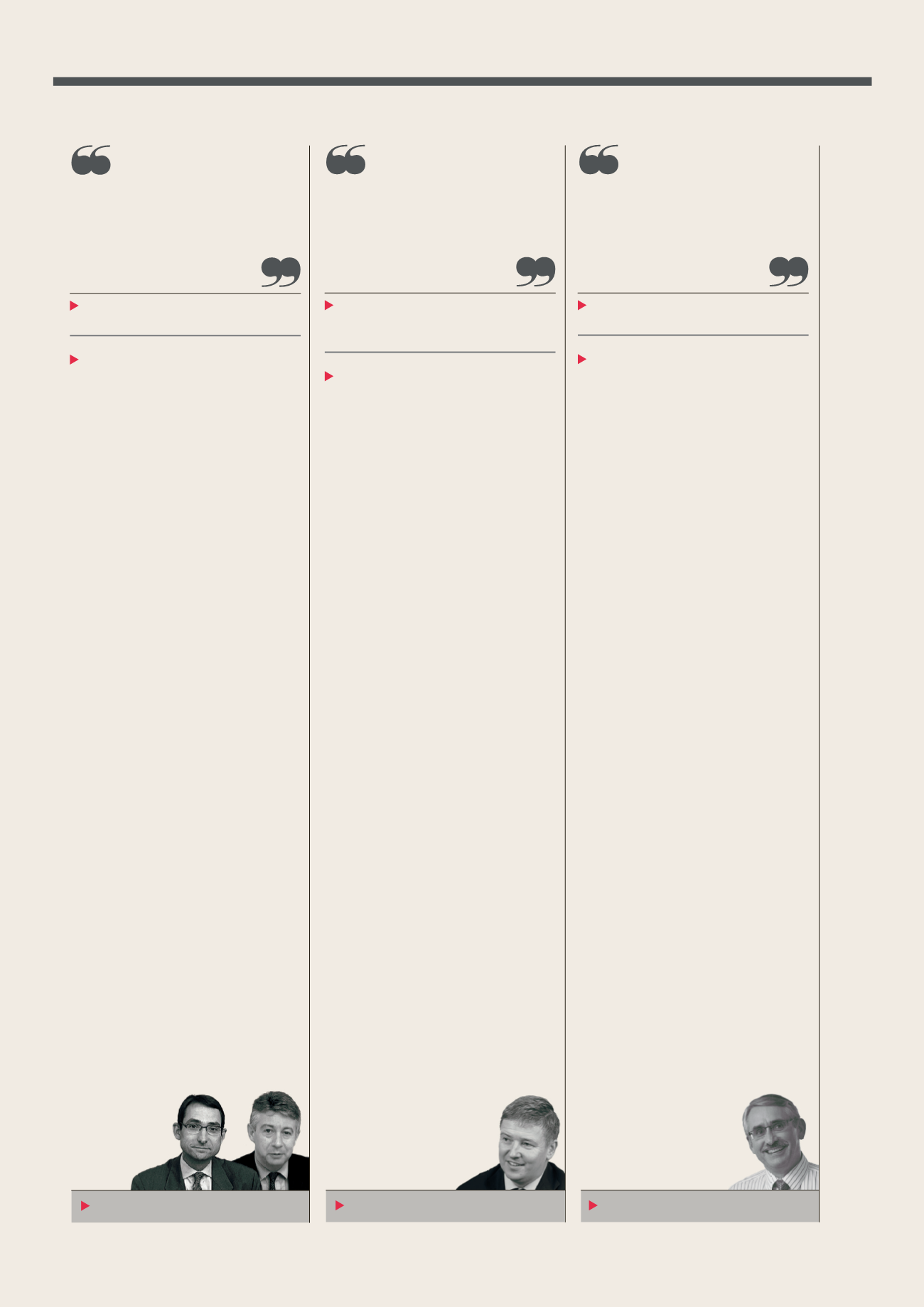
Kenneth M. Buntrock
I
f it walks like a duck and talks like a duck,
it’s a duck.The same applies for stock
market bubbles.Absolute valuations within
the UK stock market, arti cially in ated by
quantitative easing, are unattractive to us
as fundamental investors in the absence of
an improvement in underlying corporate
fundamentals.We have been repeating this
message for many months, and we currently
have no reason to change our stance.
Our focus continues to be on identifying
companies that can generate above-average
returns over the long term through
compounding growth. Unfashionably, we
seek to buy and hold stakes in companies
that are high-quality franchises which
generate plentiful free cash ow and have
solid balance sheets marked by low levels
of debt. High-return investments are scarce
in the low-return environment now facing
us, but we believe we can achieve attractive
long-term returns through the patient
process of holding stocks that regularly
compound their growth over time.
J O HAMBRO
Joint manager:
UK & General Progressive*
Quantitative easing has artificially
inflated UK stock market valuations
We currentlyhave
no reason to change
our stance
John Wood
All information correct as at 30 September 2014
*Closed to new investments
E
uropean high-yield bonds delivered
a positive return in the three months
to 31August; however sterling strength
o set these gains, with the total sterling
return for the sector negative. Bond
market returns over the past three months
were driven by geopolitical concerns and
central bank policy.The European Central
Bank (ECB), in an attempt to stimulate
growth and in ation, began the period by
cutting the deposit rate (the rate banks
receive on funds deposited with the ECB)
to below zero and introducing measures
aimed at lowering the cost of funding for
banks.These, and expectations that further
measures would be introduced, have
provided strong support for government
bonds, with 10-year German Bunds ending
August with a historically low yield of
0.89%. In contrast economic data in the
UK has broadly continued to improve.As
a result, interest rate expectations have
diverged and sterling has strengthened
against the euro. In this environment
higher-duration, higher-quality credits
have tended to outperform. Default rates
remained low and high-yield issuance
buoyant before tailing o inAugust as
risk aversion increased.According to data
from Merrill Lynch, European high-yield
bonds achieved a total return of -1.3% (in
sterling terms) over the three months to
the end of August. Sterling strengthened
from €1.23 to €1.26 over the same period.
INVESCO PERPETUAL
Corporate Bond
Higher-quality credits outperform as
sterling strengthens against euro
Economic data in
theUKhas broadly
continued to improve
Paul Read and Paul Causer


