



 23 / 44

ANALYSIS
TECHNOLOGY
THE INVESTOR
|
23
30,000 robots.‘It currently has just
10,000,’ she says,‘and has meanwhile taken
on an additional 100,000 human workers.
‘Jobs will only disappear when
businesses invest in computerised
equipment. History provides many
examples of technologies spreading slowly
because the old ones remain profitable,
because additional investment is needed,
or because there are other barriers to
achieving the necessary level of investment.’
That is not to underestimate the need
to prepare workforces for automation,
however. Professor Coyle believes that
governments must focus on education.
‘An obvious requirement is for more and
better education.This may sound banal
but little has been accomplished, despite
the fact that the policy world has been
talking about the need to improve
education for more than a decade.Most
European countries have systems that
deliver an elite with high cognitive skills.
‘The need now is to focus education and
training on non-routine – cognitive and
non-cognitive – skills that will ensure
people are able to complement, rather
than be substituted by, newmachines.’
1, 2
https://deepmind.com, March 2016
3
www.mooreslaw.org,April 2016
4
www.intorobotics.com, July 2015
5
www.bofaml.com,April 2015
6
www2.deloitte.com, January 2016
7 www.whitehouse.gov, February 2016
8
www.bankofengland.co.uk,November 2015
Moore’s Lawholds that
the processing power
of computers doubles
every two years
Balance sheet
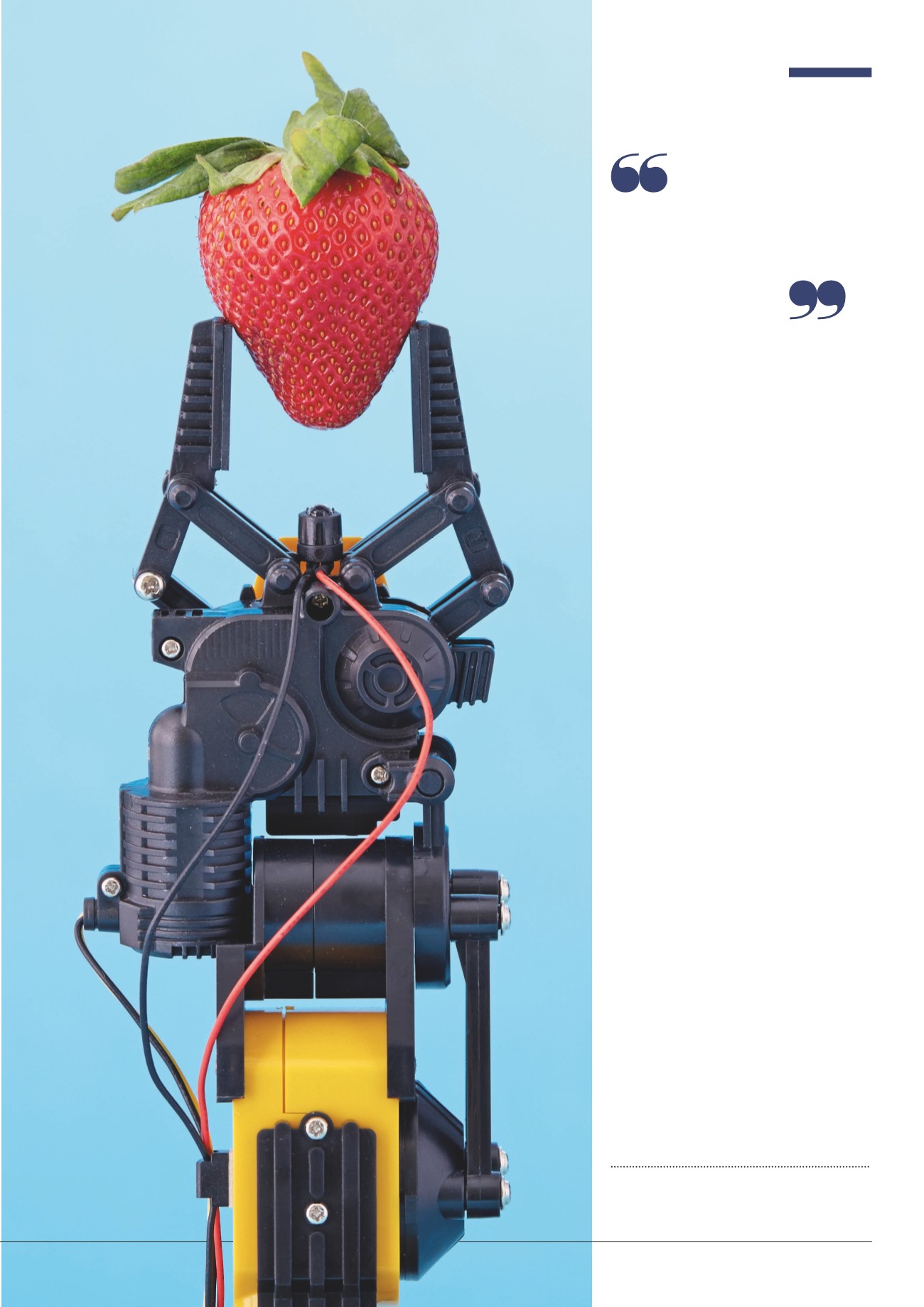
The rise of big data could see a ‘robot
revolution’, potentially putting jobs traditionally carried
out by humans at risk of automation.