



 38 / 44

THE INVESTOR CENTRE
All information correct as at 30 June 2016
SANDS CAPITAL
Satellite manager: Global Equity
Monsanto and LinkedIn acquisition
announcements look positive
Merger and acquisition
activityheating up
around theworld
RWC
Equity Income
Multinational stocks such as Unilever
and AstraZeneca held up well
Initial enthusiasmgave
way to fears about the
UKreferendum
PAYDEN & RYGEL
Joint manager: Diversified Bond
and Multi Asset
Investment grade and high-yield
credit positions give positive returns
Investment grade
corporate sectors
contributedpositively
T
he equity market was volatile
throughout the quarter as initial
enthusiasm about a dovish Federal
Reserve and additional Chinese
stimulus gave way to fears about the
UK
referendum.Atthe start of the
period rising oil prices ironically
bene ted the equitymarket;but by June
the political situation had begun to
dominate sentiment. Commentators’
warnings that a Brexit vote would
produce a violent market reaction
were confounded with the FTSE 100
nishing the week of the referendum
above the close of the previous Friday.
The sectors hit hardest by the
decision to leave were domestically-
focused cyclicals such as retailers and
housebuilders, as well as nancials
where the fund had little exposure.
Conversely, some of the fund’s largest
holdings actually rose on the day after
the referendum as they were multi-
national stocks such asAstraZeneca,
GlaxoSmithKline and Unilever where
earnings bene t from sterling
weakness.Thus the portfolio was well
positioned to withstand this event.
Should share prices continue to
decline, the fund’s cash weighting will
be put to work buying stocks at more
attractive levels.
M
erger and acquisition activity
continues to heat up globally.
We think this is a normal phenomenon
given where we are in the economic
cycle, especially amid the overall
environment of sluggish GDP growth,
easy money and low interest rates.
Two of our 39 holdings –Monsanto
and LinkedIn – have been subject to
acquisition announcements. In late
May,Monsanto received an unsolicited
acquisition o er fromGerman chemical
and pharmaceutical company Bayer.
Strategically,we think combining the
agribusiness assets of both companies
makes sense. Regardless of price,we
expect this transaction will be di cult
for Bayer to complete due to
regulatory concerns, as well as
dissension within its shareholder base.
Microsoft’s announcement of its
intention to acquire LinkedIn followed
LinkedIn’s disappointing 2016
earnings guidance,which sent shares
down more than 40%. LinkedIn’s
decision to sell suggests to us that its
unique dataset of information – upon
which our investment case relies – is
indeed valuable, but perhaps the path
to growth would continue to be a
bumpy ride; in which case a sale to
Microsoft is a good outcome.
A
rally in risk assets has been
supported by the sharp recovery
in the price of oil and commodity
prices generally, coupled with the
ultra-accommodative monetary
policies pursued by many central
banks. Increasingly, negative yields on
government bonds and,more recently,
on very high-quality corporate bonds
as well, have encouraged investors to
seek higher yields in the non-
government bond markets.This has
led to a re-tightening of credit spreads
and signi cant corporate bond
issuance to meet demand.Although
evidence of robust US economic
growth had led to speculation that the
Fed could raise interest rates as early as
June, this is now unlikely following the
weak May employment data.
Our strategy has bene ted from the
low level of government bond yields
and tighter credit spreads, producing
strong positive returns.The portfolio’s
allocations to the high-yield,
mortgage-backed, and investment
grade corporate sectors all
contributed
positively.Wehave scaled
back our long US dollar currency
position.Weexpect that central banks
will continue to pursue highly-
accommodative monetary policies.
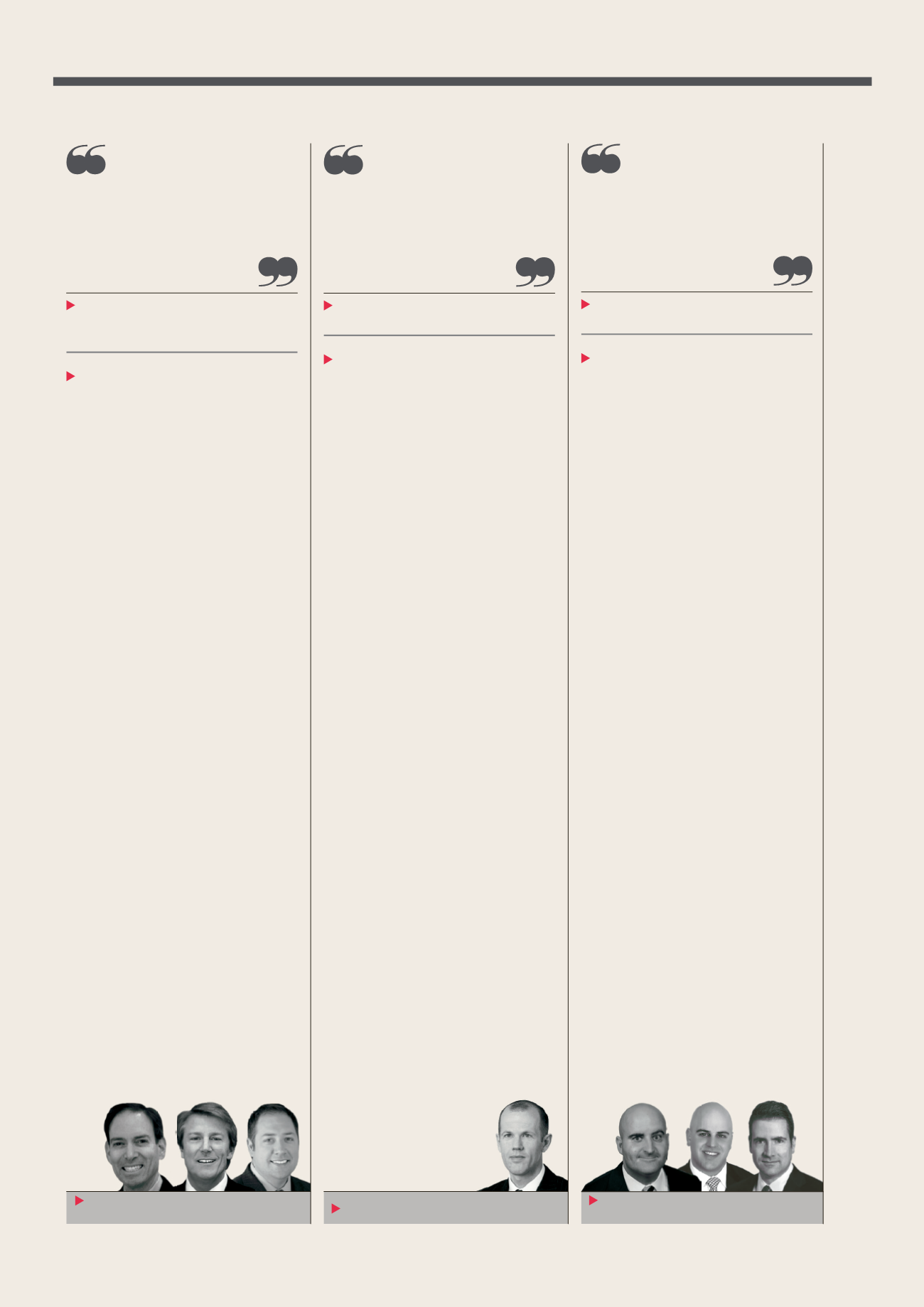
Nick Purves
David Levanson, Sunil Thakor and
Perry Williams
Scott Weiner, Brian Matthews and
Brad Boyd
38
|
THE INVESTOR