



 40 / 44

THE INVESTOR CENTRE
All information correct as at 30 September 2016
S. W. MITCHELL CAPITAL
Continental European
Joint manager: Greater European
and Greater European Progressive
Results and company sentiment has
been more upbeat than predicted
European corporate
sector likely to be
una ectedbyBrexit
STEWART INVESTORS
Worldwide Opportunities
Henkel and Unicharm provide positive
returns for portfolio during quarter
Financial institutions
need to bemore aware
of reputational risks
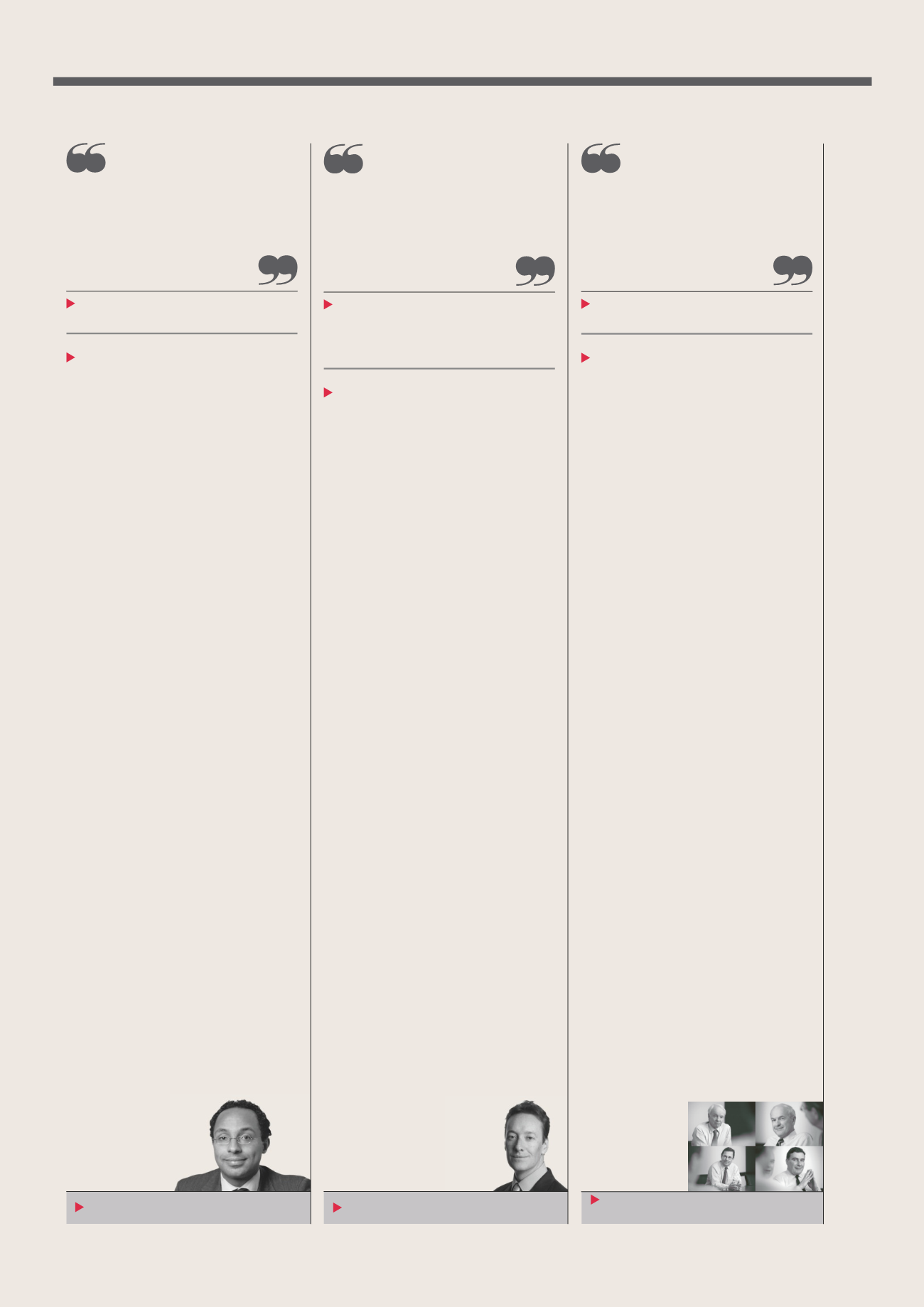
Stuart Mitchell
Downside volatility
fromBrexit vote has
been short-lived
TWEEDY, BROWNE
Satellite manager: Global Equity
Upcoming volatility is likely to
present investment opportunities
William Browne, Tom Shrager,
John Spears, Robert Wyckoff
T
hree months on from the Brexit
vote, evidence continues to build
that the European corporate sector
will be less a ected than even our
more optimistic outlook had suggested.
After such a momentous decision,
there has been a great deal of anxiety
over the outlook for the UK economy.
However, theAugust manufacturing
PMI recorded the most dramatic
increase in the index for 25 years.
Companies have been consistently
more upbeat than many had expected.
Most notably, the banks have reported
no changes in trend post-referendum.
Likewise, housebuilders have made a
number of encouraging comments.
Similarly, Continental European
economies appear to have been,
hitherto, una ected by the Brexit
result. Remember, the UK accounts
for just 6% of eurozone.The ECB and
Bank of England are likely to remain
accommodative while European
governments have hinted at less
austerity in response to the vote.
The Italian referendum on
constitutional reform, however, does
loom on the horizon.Although,
widespread appetite for EU referenda
as yet remains limited.
T
he fund bene ted from positions
in Henkel (Germany: consumer
staples) and Unicharm (Japan:
consumer staples) over the past three
months.Onthe negative side, Infosys
(India: IT) andTullowOil (UK:
energy) declined.
We remain focused on investing in
quality companies trading at
reasonable valuations. Recently,we
have been reviewing some nancial
institutions and engaged with them
about the risks associated with o ering
wealth management products to their
clients.This is an area where we see
reputational risk, as well as nancial
risk, as evidenced by the large nes
levied in recent years. Financial
services are often viewed as a capital-
light distribution business where
signi cant returns can be made.There
is often pressure to grow these
businesses for short-term results, in a
way that we believe is neither ethical
nor sustainable over the long term.
We are not alone in our viewandwe
still believe thatmany nancial
institutions have not yet fully recognised
the responsibility they have in ensuring
clients understand the products that
they
buy.Asa result,we continue to
engagewith these companies.
W
hile the Brexit decision sent
shockwaves temporarily
through equity markets in late June,
the downside volatility turned out to
be short-lived as investors refocused
on what it would mean for interest
rates and future central bank behaviour.
In fact, during Q3 European stocks
have produced solid returns, led in
terms of contribution to the MSCI
World index by none other than UK
equities.Asto the lasting impact, if
any, from the UK’s break with the
eurozone, we’ll just have to see.
As one market commentator
recently put it, the largesse of central
bankers has turned the investment
world upside down, with investors
today drawn to equities for yield and
to bonds for capital appreciation.
This has made for a challenging
environment over the past couple of
years for fundamentally driven value
investors. Pricing opportunities in
high-quality businesses have been
few and far between.That said, as
value investors we are encouraged by
the increase in market volatility and
the change in market leadership away
from momentum and back to
securities that have a more rational
price-to-value relationship.
Jonathan Asante
40
|
THE INVESTOR