



 42 / 44

THE INVESTOR CENTRE
All information correct as at 30 September 2016
T
he quarter began in turmoil after
the UK’s unexpected decision to
leave the EU sent tremors through the
nancial
markets.Asthe quarter
progressed however, investors have
taken a more rational look at what
Brexit is likely to mean for the UK
economy and stock market,
concluding that it isn’t as big a deal as
initially feared.The UK stock market
staged a steady recovery as the period
progressed,with the FTSEAll Share
index approaching its all-time highs.
We have long believed that there are
much bigger, global issues to worry
about than the UK’s relationship with
Europe.Debt, ageing demographics,
de ation and a lack of productivity
growth are among the factors that have
concerned us for some time and that
the equity market appears to be
somewhat complacent about.
Despite these challenges,we believe
that the UK stockmarket can still
deliver attractive long-term returns.
We aim to avoid overvalued stocks and
focus the portfolios towards the most
attractively valued
opportunities.Assuch,we remain con dent in the UK
equity asset class but believe we can do
even better than the market and deliver
attractive returns in the long run.
WOODFORD
Income Distribution, UK Equity and
UK High Income
Focus on best-value companies to
create value despite market challenges
Market calms a er
initial shock of UK’s
vote to leave EU
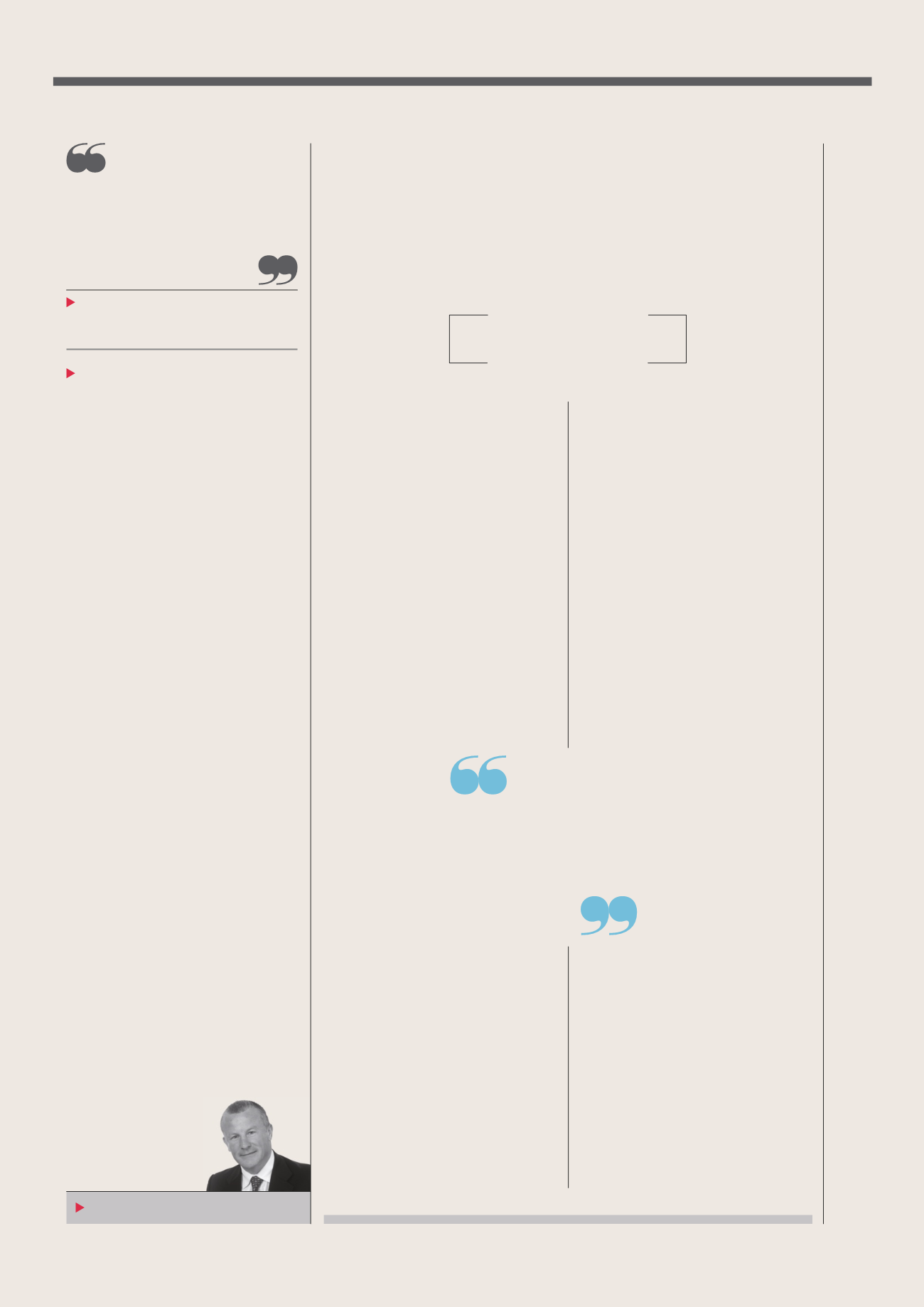
Neil Woodford
By Heather Connon
O
ne of former
Chancellor George
Osborne’s legacies is
the rise in the
minimumwage,
announced in his July 2015 Budget.
Dubbed the National LivingWage
(NLW), it started inApril and the
minimum hourly wage for employees
aged 25 and above increased by 50p to
£7.20,with further rises set to take it
up to 60% of the median wage for the
over-24s by 2020
1,2
.
Osborne estimated that this would
mean a minimumwage of £9 an
hour by 2020; assuming the new
Chancellor, Philip Hammond,
honours the
pledge, it could rise
by more than a
third in just ve
years.This is good
news for earners
but could prove
costly for all
businesses if the
impact is to push up other pay rates to
maintain di erentials.The government
itself outlined the industries most
likely to be a ected (cleaning,
hospitality and hairdressing) and
accepted that small businesses would
be disproportionately a ected
3
.
The impact could be felt in one of
three ways: sta will be laid o ; prices
will rise; or businesses will take a hit on
pro ts. It’s too early to analyse which
will prevail but an initial assessment by
the Resolution Foundation
3
indicates
little evidence of lay-o s; a mix of
strategies are in use,with increased
prices the favourite.
Further analysis will be a ected by
Brexit, but Resolution says most
analyses point to a lower than
expected minimumwage by 2020.
But, it adds:‘It reinforces the challenge
employers were likely to have faced
with the NLW, the apprenticeship levy
and auto-enrolment: the end of an era
of a large pool of relatively cheap
labour. Firms may have to reconsider
their business models. Industry bodies
in some low-pay sectors are actively
promoting their jobs as o ering career
opportunities.’
The evidence
fromother
countries suggests
that the impact of a
minimumwage on
employment is
limited:Australian
academics,Damian
Oliver and John Buchanan, point out
that the three countries with the lowest
minimumwage – Spain,Greece and
Ireland –had the highest unemployment
rate (at the time of writing
4
), while
Australia, with one of the highest,
had the lowest unemployment rate.
Meanwhile, an EU assessment
concluded:‘Negative implications for
jobs and competitiveness can be
compensated for via othermechanisms,
including productivity gains.’
There’s little evidence
of lay-offs: a mix of
strategies is in use,
with increased prices
the favourite
The National LivingWage could bring gains to
businesses, as well as to earners
Afairwage,
a fair deal
1. gov.uk, July 2015 2. resolutionfoundation.org, July 2016 3. visual.ons.gov.uk,April 2016 4. sydney.edu.au
,
July 2016
42
|
THE INVESTOR