



 12 / 40

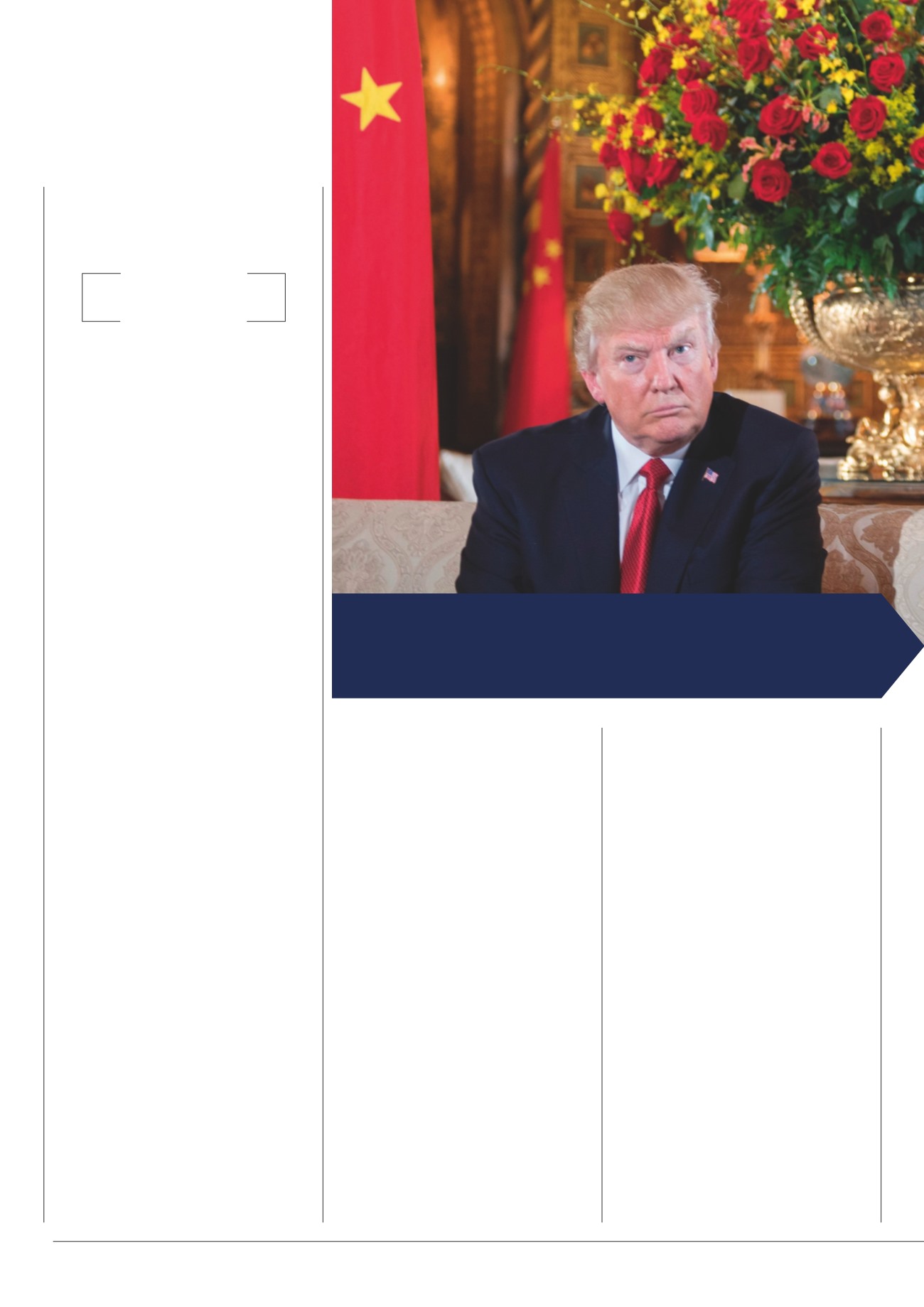
developments inWashington that put at
risk much of the President’s domestic
agenda, including tax reform and
economic policy.Trump’s reactions
could turn more volatile, and his own
position might be threatened. Investors
in market economies become nervous
when the rule of law comes under threat.
Brexit may now look less threatening
to Europe in the wake of Macron’s
victory, but it remains nonetheless a
fundamental tear in the EU’s tapestry.
Unless the negotiations are managed
well, Brexit could have an adverse
effect on the UK economy, undermine
growing business confidence in the
eurozone and make it harder for populist
parties to win in Italian elections
that are due in 2018, but which could
happen sooner
2
.
Yet the global economy seems
blissfully insensitive to all these things.
Our geopolitical experiences over the
decades, from the Cuban Missile Crisis
12
|
THE INVESTOR
R
ising nationalist sentiment
is creating tensions globally.
In the long shadows thrown
by the financial crisis, which
started 10 years ago this summer,
profound political changes have been
unleashed in rich economies and some
major emerging countries. Political
parties espousing populism and
nationalism have regularly achieved 30%
of the votes or more in elections in
advanced economies; and nationalist
sentiment triumphed in the UK’s EU
membership referendum and the US
presidential election in 2016. Most
recently, Emmanuel Macron bucked this
trend in the French presidential election,
but his nationalist opponent still won
34% of the vote.
More vigorous nationalism in the
US and Europe is part of a wider
phenomenon that has taken root in other
significant countries, including China,
Russia,Turkey and India.Yet, despite the
nationalism that is cranking up
geopolitical tensions, the world
economy seems to have been barely
affected. If anything, the underlying
momentum in global growth has picked
up a bit to around 3.5%
1
, with the US
and the eurozone turning in respectable
performances in the past few months,
and China stabilising after a wobbly
period in 2015-16.We should ask why
that is, and whether it might continue.
The most worrying threats lurk inAsia,
where the US and North Korea are
sparring over the latter’s nuclear
capabilities, with the US looking to China
to bring pressure to bear.As a result, the
US and China appear to have laid down
arms for the moment regarding
The world economy has kept
geopolitics at bay, so far
potentially serious frictions over trade
and maritime rights in the South China
Sea.The recent election of Moon Jae-in as
South Korean president looks likely to
lead to more conciliatory relationships
with both North Korea and China. If
DonaldTrump subsequently loses
patience with, or trust in, China’s ability
to bring North Korea to heel, the
likelihood of a renewed flare-up in
Sino-US tensions is high. It is
questionable, anyway, whether the world’s
two major powers can subordinate
their rivalry to interdependence for long,
given the political characters of their
current leaders.
Meanwhile, US relations with Russia,
which has pursued its interests
aggressively in Syria, Ukraine and the
Baltics, remain tense. In an alarming
subplot, PresidentTrump’s sacking of
FBI Director James Comey, who was
investigating theTrump campaign team’s
links to Russia, may well spur political
By George Magnus
Getty Images. Sources: 1 oecd.com, March 2017; 2 lse.ac.uk, May 2017; 3 zerohedge.com, May 2017
GLOBAL