



 23 / 40

‘
enjoy the process of giving without the worry,’
Wickham says.
John Stone, a financial services entrepreneur who
created the Stone Family Foundation in 2005, quotes
Aristotle’s remark that giving away money
intelligently is more difficult than making it.
2
The
philanthropist, who has now funnelled many tens
of millions into his trust, decided at the outset that
he would not start his own charities but would
support others rather than ‘reinvent the wheel’.
3
The good news is that the charity and social
impact investment sectors have become more
highly professionalised and thus better able to
evidence what they have achieved – the social
impacts.And there are now many ways that
make charitable giving on any scale, large or small,
both attractive and pretty straightforward.
Tax benefits are important, both in their own
right and because they can start a conversation
about how best to give. Both outright gifts to
P
hilanthropy tends to be a journey,’
says JoannaWalker of the Charities
Aid Foundation (CAF).As individuals,
we typically start out giving small
amounts to charities pretty much on
impulse; but as we progress through life and
become better off, we start to give in a more
informed way.Then if we are fortunate enough to
become wealthy, we may begin to donate more
impressive sums – and at the same time concern
ourselves more about the social outcomes, the
‘bang for our buck’. Finally, we may be drawn into
the work of a favourite charity, become a volunteer
and want to shape its strategy.
One of CAF’s clients, a successful investment
manager, is far down this path. Some years ago
he determined he would retire once he had put
£3 million from his income into his own charitable
fund: his retirement project, now a year or so off, will
be able to hand out the money over a decade or so.
People’s rationales for starting to engage vary
enormously. Some people want to support a
specific charity because a family member has
been struck by a specific disease. Others hold
a cause such as animal welfare close to their heart.
Some are happy to give but don’t want to get
involved in the charity itself.And a few rationalists
are willing to invest wherever the evidence suggests
it will do humanity most good, which was
broadly the approach of the Bill & Melinda Gates
Foundation when it chose to work towards
eradicating malaria.
But how can you ensure that you give to charities
that will have the most impact and gain maximum
personal rewards? SteveWickham, Director of
philanthropy agency,The Giving Department,
believes the increasingly complex nature of the
charity sector is one factor prompting more people
to seek specialist external support to guide their
charitable giving.‘Since 2010 when we launched,
we have seen more wealthy individuals and families
seek support from trusted experts in all aspects of
their philanthropy.’
With over 160,000 charities registered in the
UK alone,
1
many potential philanthropists can find
it hard to know where to start.‘The Giving
Department’s clients have many competing calls
on their time and so are looking for help to make
sure their charitable gifts deliver maximum
impact to causes they understand and have
confidence in. Helping to provide relevant due
diligence enables individuals and families to really
THE INVESTOR
|
23
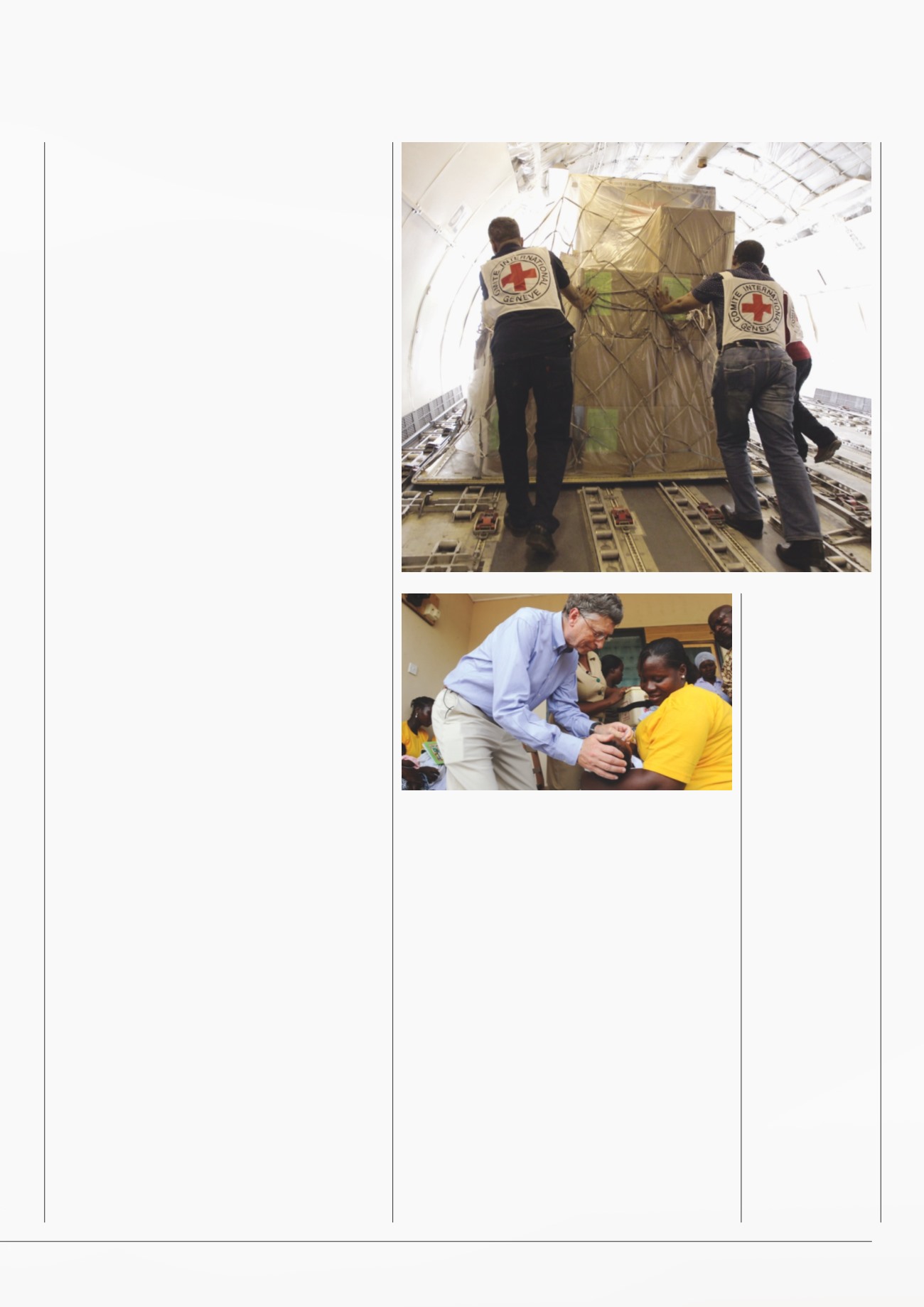
HELPING HANDS
The International
Committee of the
Red Cross and The
Bill & Melinda Gates
Foundation have
helped millions in
need worldwide
PHILANTHROPY