



 6 / 40

06
|
THE INVESTOR
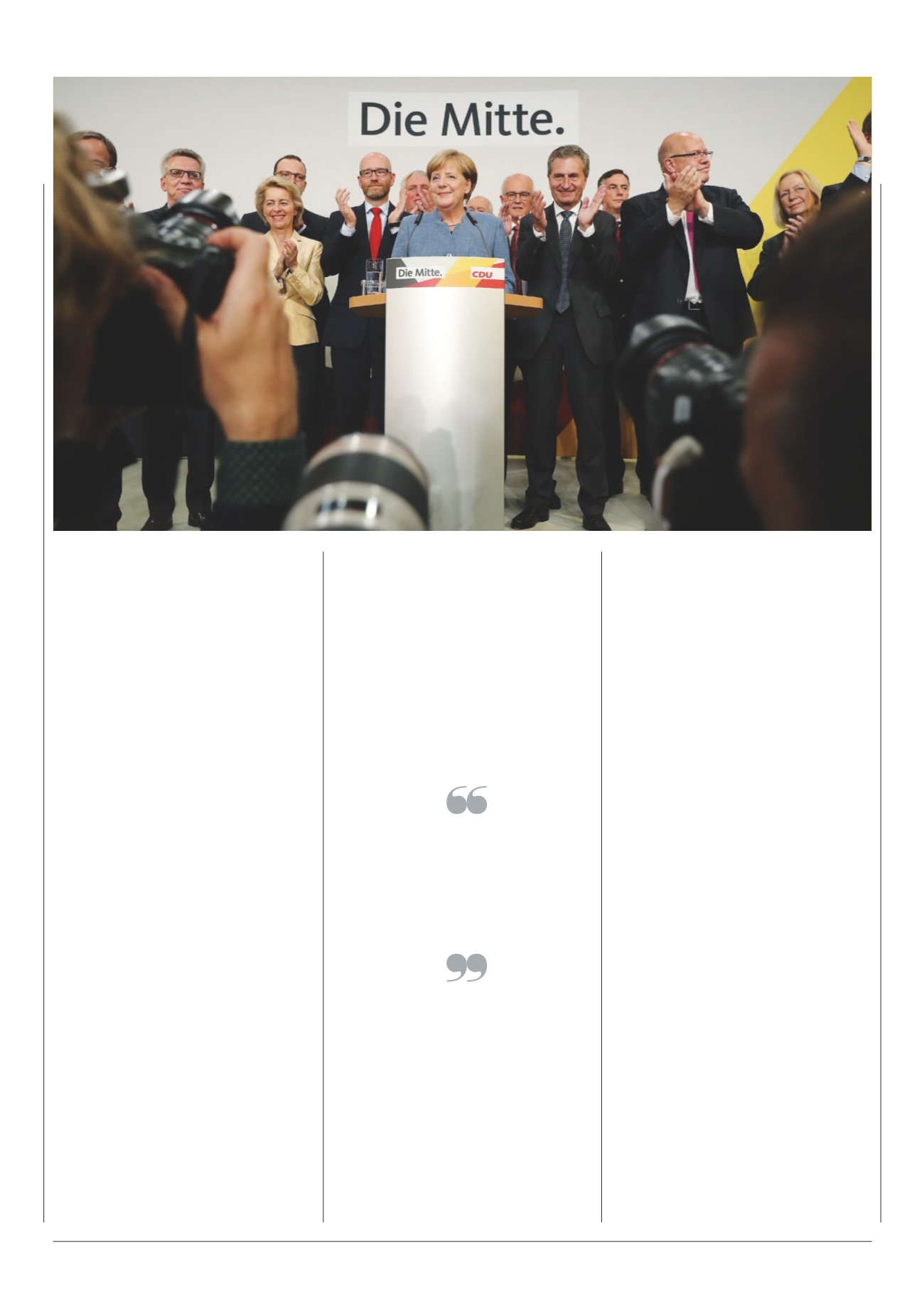
Getty Images, PA Images. Sources: 1 http://statisticstimes.com, December 2016; 2 zerohedge.com, September 2017
negotiations for the EU.The coalition
process in Berlin will only add to the
delay in engaging with Brexit.
The formation of a new government
in Germany can be very drawn out.
The British custom of power being
transferred between one administration
and the next in the course of an
afternoon is unheard of in Berlin.
Instead, there are weeks, if not months,
of negotiations between the parties as a
deal is hammered out.The result is a
heavyweight contract – a so-called
Vertrag
– in which all the various policy
positions have been duly noted.
The advantage is that once
something has been agreed and made
it into the
Vertrag
the parties stick to
this.The downside is that it takes a
while to get there. Four years ago it
took Merkel the best part of three
months to hammer out a deal with the
SPD – a party it had been in a grand
coalition with before.
This time there will be more parties
around the table, with a wider range
of fundamental differences between
them.This does not mean that it is
impossible to reach an agreement.
Analysts believe that a deal is
achievable in which the individual
parties each secure at least one big
prize – a particular policy or a specific
ministry – all presided over by the
moderating and ideologically flexible
chancellor. But it will take time.
Eventually – perhaps only in the new
year – Germany will get a new
government, led by a figure familiar
on the international stage. But
expectations are that the next
administration will be more focused
on domestic policy – if only to address
some of the underlying issues that saw
an increase in support for the smaller,
extremist parties. So one of the results
of the election is that, just as the rest
of the world is looking to Germany to
play a bigger role globally, the country
could become more inward-looking.
Frederick Studemann is Comment and
Analysis Editor at the
Financial Times
Expectations are that
the next administration
will bemore focused on
domestic policy
years.The veteran CDU politician,
often dubbed Merkel’s vice-chancellor,
is expected to become speaker of the
Bundestag where, it is hoped, he will
rein in any wayward or provocative
behaviour from the new cohort of
AfD deputies.
But any hopes that the departure
of the personification of Germany’s
hardline financial policy, the man who
was prepared to see Greece drop out
of the eurozone, will see a softening in
Berlin’s position may prove misguided.
One of the credible options for the
carve-up of ministries in a Jamaica
coalition is for the finance portfolio
to go to the FDP. ‘An FDP finance
minister will not reject all forms of
a eurozone reform agenda, but its red
lines on the eurozone budget are for
real,’ notesWolfgang Münchau of
Eurointelligence.Therefore, the
departure of Schäuble may in fact limit
Germany’s ability to respond to
Macron’s eurozone agenda.
From a British perspective, hopes
that the German election would
improve the dynamics of the Brexit
negotiations were always a bit
overblown. Berlin has been consistent
in emphasising the primacy of the
European Commission in handling