



 8 / 40

08
|
THE INVESTOR
used at most a few hours a day could
evaporate.
4
It would be the operators
of the ride-hailing apps making
the choices.
And the winners? In addition toTesla,
the pretenders to the industry crown
are those steeped inAI, including
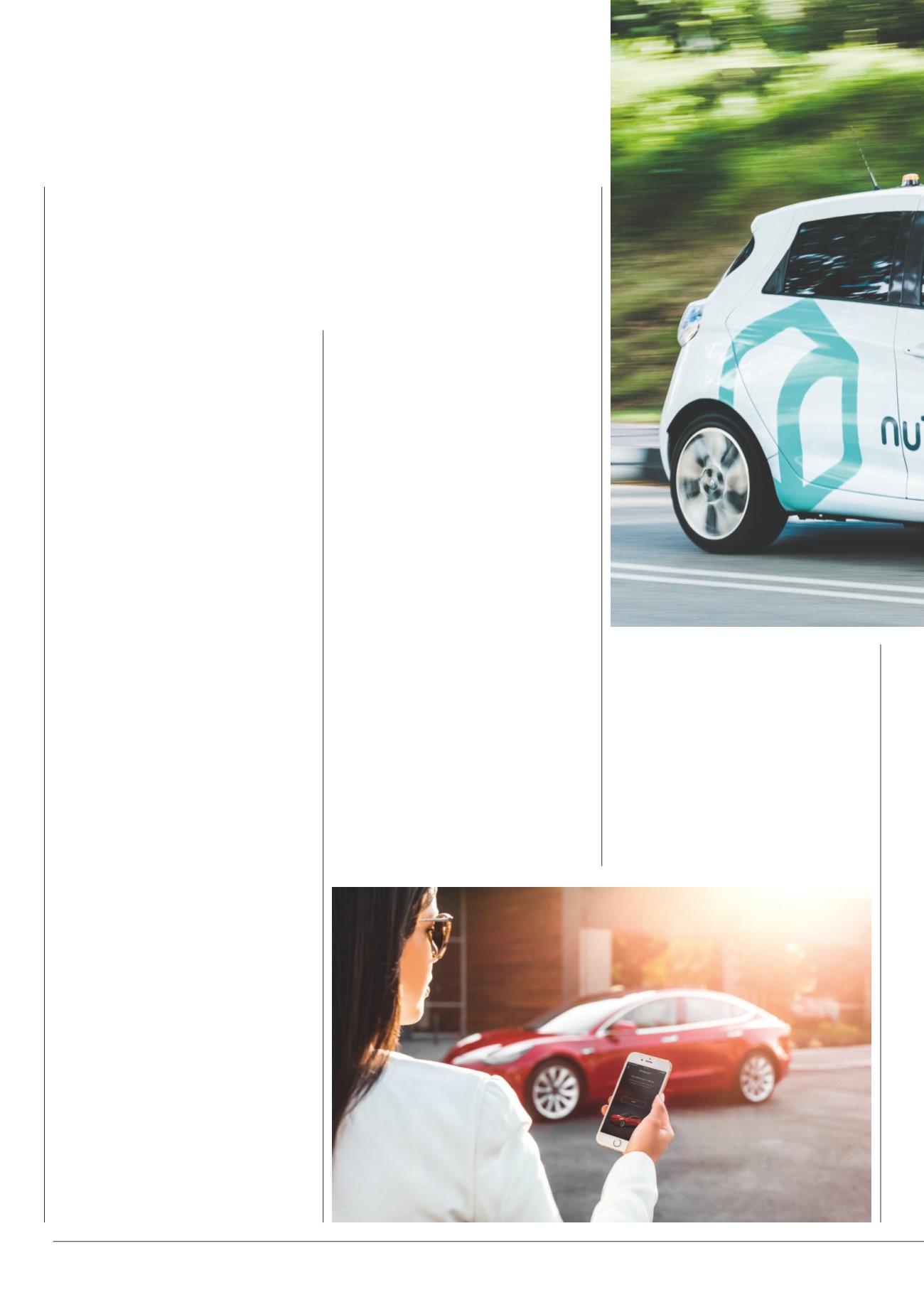
Apple, Google, Lyft, nuTonomy and
Uber. Back in March, we saw US
chipmaker Intel pay $15 billion to
acquire Israeli autonomous driving
technology pioneers Mobileye.
5
The
prospects are also sunny in the battery
industry for the likes of Panasonic.And
Dyson, the UK appliance-maker, says
it is still committed to investing
£1 billion in battery technology over
the coming years.
6
The shift to the ‘app car’ could affect
the jobs of millions of truck and taxi
drivers. In the self-drive era,‘platooning’
will become the norm on motorways,
with cars travelling at high speed
but with only short distances between
them; each vehicle in constant
communication with the others.
T
hree
‘megatrends’
– electrification,
car sharing and
autonomous
driving – are
poised to
transform cars
and how we use them, and at a pace few
might have imagined even a couple of
years ago.TheVolkswagen diesel
emissions scandal, the launch of Tesla’s
new and cheapest electric car, the
Model 3, and rapid advances in driverless
technologies have all contributed to this
momentum; sufficient to embolden the
UK government to ban the sale of new
diesel and petrol cars by 2040
1
.
On the one hand, the evolution of
cars and how we use them promises
to improve safety, reduce the costs of
car travel, and curb congestion
2
. On
the other, it is poised to generate vast
amounts of sensitive data about us
as individuals and a surge in vehicle
movements; and to hand over
responsibility for driver safety to
artificial intelligence (AI)
3
.
On the corporate side, those most
threatened are self-evidently incumbent
car producers. Mired by the emissions
scandal, the mighty German
manufacturers suddenly look especially
vulnerable.At stake are not just their
factories and signature internal
combustion technology (electric cars
are mechanically far simpler), but
their prestigious brands, backed by
years of massive advertising budgets.
These marques could count for far less
if car transport were to resemble the
ride-hailing app sector.The incentive
for private individuals to own a car
DRIVERLESS CARS
Getty Images. Sources: 1 edie.net,August 2017; 2, 3, 10 Alex Glassbrook,
The Law of Driverless Cars
; 4, 8, 9 deloitte.com, February 2017; 5 newsroom.
intel.com,August 2017; 6 yahoo.com,April 2017; 7 electricityinfo.org, July 2017; 11 designnews.com, July 2017; 12 knightfrank.com,August 2017
Meanwhile, the switch from fossil
fuels to electric power for cars will place
new demands on the electricity
generation industry. National Grid
predicts the extra electricity needed
would be almost 10 times the total
power output of the Hinkley Point C
nuclear power station.
7
Plus, scarce
commodities for batteries, such as cobalt
and lithium, are likely to command
increasingly high prices.