Weak wages
have been
topped up
by tax credits
and in-work
benefits
ANALYSIS
INFLATION
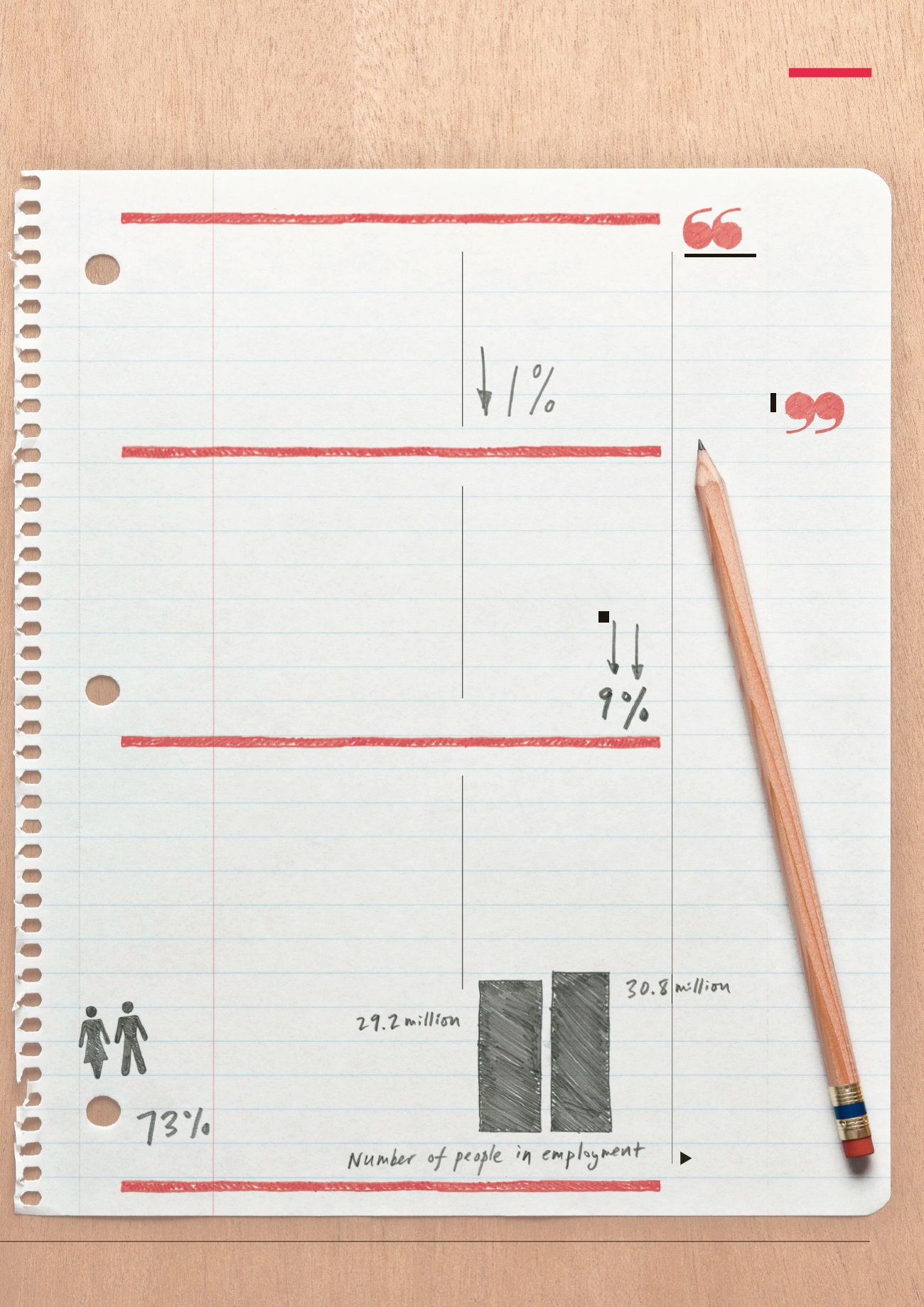
In May 2010, the Consumer Prices Index stood at 3.4%. By November
2014, it had come down to just 1%, with the Bank of England saying
it was ‘more likely than not’ that it would drop below this over the
following six months. Inflation has been below the 2% official target
since the start of 2014. This was preceded, however, by a long period of
above-target inflation, with the rate peaking at 5.2% in September 2011,
due to the impact of higher food and energy prices and the Chancellor’s
hike in VAT from 17.5% to 20%. For much of the parliament, inflation
has been surprisingly high in the wake of a deep recession.
SCORECARD RESULT
Inflation has come down in a timely
way for the government, but voters
will remember the strongly-rising
prices of earlier years.
LIVING STANDARDS
Until they crept modestly above inflation in the autumn of 2014,
wages had been rising more slowly than prices since 2009, and thus
for almost this entire parliament; one of the longest periods of falling
‘real’ – inflation-adjusted – wages on record. During this time, real
wages have fallen by about 9%. There are other measures that show the
government’s record on living standards in a better light. People have
other sources of income than wages. One reason the budget deficit has
come down more slowly than the Treasury hoped is that weak wages
have been topped up by tax credits and in-work benefits. Even so, the
broadest measure of income growth – real household disposable income
per head – was 1.5% lower in the second quarter of 2014 than four
years earlier. Living standards, so far, have fallen.
UNEMPLOYMENT AND JOBS
Unemployment has fallen significantly, after initially rising, during the
coalition’s period in office. From 2.49 million, or 7.9% of the workforce,
in May 2010, it fell to 1.96 million, 6% of the workforce, by late 2014.
The narrower claimant count dropped from 1.49 million to 930,000 over
the same period. The fall in unemployment, if anything, understates the
strength of the labour market. The total number of people in employment
has risen from 29.2 million to 30.8 million, a record, since May 2010,
with private-sector job creation easily offsetting public-sector job cuts.
The proportion of the workforce in employment, 73%, is also close to
a record high and compares with 70.4% in May 2010. All measures of
labour market activity have been stronger than expected and recent job
creation has been dominated by full-time posts.
SCORECARD RESULT
The big drop in real wages
and the smaller fall in overall
living standards is a blot on the
government’s record. A recent
report from the International Labour
Organisation said the drop in the
three years to 2013 was the biggest
of all major G20 countries.
THE INVESTOR
|
07
SCORECARD RESULT
The strength of the job market
is a considerable plus for the
government, and certainly compares
favourably to the record high
unemployment of 10.4% in France.
Meanwhile, the rates in the US and
Germany have fallen to 5.8% and
4.9% respectively.


