



 34 / 44

34
|
THE INVESTOR
THE INVESTOR CENTRE
All information correct as at 31 March 2016
INVESCO PERPETUAL
Joint manager: Multi Asset
Portfolio focuses on well-established,
high-yield bonds at low risk of default
Risk-aversionwas the
dominant sentiment
at start of the year
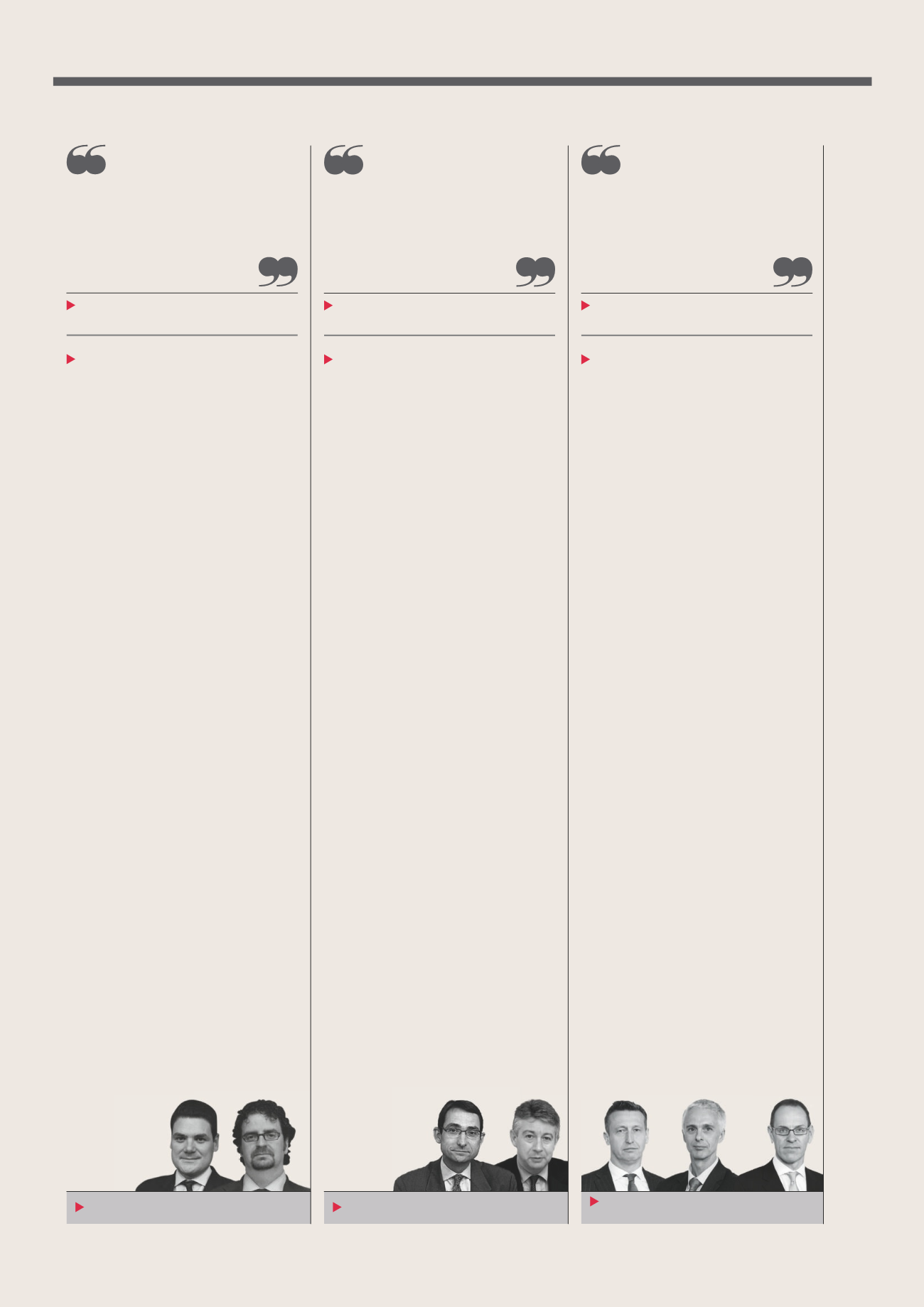
David Millar, Dave Jubb and
Richard Batty
EDGEPOINT
Satellite manager: Global Equity
Investment opportunities available
in sectors hardest hit by volatility
Fear has led to
investors herding
to ‘safety sectors’
Tye Bousada and Geoff MacDonald
INVESCO PERPETUAL
Corporate Bond
Portfolio is structured to avoid the
worst effects of short-term volatility
Asia suffered the
brunt of bearish
sentiments
T
his was one of the worst starts
to a year for equity markets, as
concerns over global growth and the
state of China’s economy, coupled
with the fresh lows in commodity
prices, took their toll.Asia suffered
the brunt of the bearish sentiments,
with equity markets in China and
Hong Kong suffering double-digit
losses. However, markets rebounded
towards the end of February and into
March as central bank actions, at
least temporarily, were supportive of
equity markets. Expectations for any
hikes in interest rates in the US and
UK were pushed back as the ECB and
the Bank of Japan experimented with
negative and zero interest rates.
We have not changed our exposure
much as a result of the market sell-
off.The strategy has held up relatively
well year-to-date, with a number of
ideas contributing to performance.
We take a two- to three-year view
of markets and expect our ideas to
contribute over that
timeframe.Weare aware that markets can be volatile
over shorter periods and think
carefully about how we implement
our investment ideas to try to cope if
market dynamics change.
T
he first three months of 2016
were volatile for bond markets.
During the first six weeks, risk-
aversion was the dominant sentiment.
This overall risk-off tone changed on
11 February, following better US
economic data, an increase in the oil
price and suggestions the ECB would
provide further monetary stimulus.
The initial market reaction suggests
the range of stimulus measures
announced (cuts to all three main
interest rates, an expansion of the QE
programme and the launch of a new,
targeted longer-term refinancing
operation (TLTRO) have been enough
to satisfy markets.Corporate bonds
– bank and non-bank bonds – have
rallied strongly,while core
government bond yields have risen.
We used the recent weakness to
selectively add some exposure, but
overall we remain cautious.Much of
the bond market is still expensive and
there remain a number of headwinds
facing the sector.Our focus is on
well-established, high-yield names in
which we believe the risk of default is
remote.Wealso have significant
exposure to subordinated financials,
subordinated insurance and non-
financial corporate hybrid bonds.
Paul Read and Paul Causer
T
he portfolio started the year beset
with downside volatility.The
return of fear to financial markets has
resulted in investors herding to‘safety
sectors’ such as consumer staples,
telecommunications and utilities. In
investing,when everyone does the
same thing, it usually shows up in
valuations.The current period of
market volatility is no exception as
‘safety sectors’ are trading at rich
multiples, and we believe there are
limited opportunities for growth over
the next three to five years. Instead,
we aim to invest in businesses that are
likely to be materially bigger in the
future, even in a tough economic
environment.Wetry to buy that future
growth today and not pay for it.Not
unexpectedly,we are finding
investment opportunities in the
sectors hardest hit by volatility, such as
industrials, IT and financials.
Two trends in the portfolio in Q1
have been the reduction of cash levels
and increased concentration in our
best ideas. Periods of volatility require
astute active management to set up the
portfolio for outperformance:we
refer to this as‘recoiling the spring’.
We remain excited about the
portfolio’s long-term prospects.