



 38 / 44

THE INVESTOR CENTRE
All information correct as at 31 March 2016
SANDS CAPITAL
Satellite manager: Global Equity
Portfolio is based on sound, long-
term business fundamentals
Valuations become
disconnected from
underlying business
RWC
Equity Income
Defensive stance with cash on hand
to take advantage of opportunities
Economic slowdown
has rippledout to
developedeconomies
PAYDEN & RYGEL
Joint manager: Diversified Bond
and Multi Asset
Investment grade and high-yield
credit positions give positive returns
March sentiment was
dominatedby the
ECB’s latest policies
T
here was significant volatility in
markets in Q1,with a sell-off in
the first fewweeks of the year offset by
a dramatic recovery at the back end of
February andMarch.
This pattern of moves reflects the
tug-of-war between deteriorating
economic and corporate fundamentals
and the offsetting, via extremely
aggressive actions,of theworld’s central
banks,which are determined to
generate inflation and keep asset prices
high.The fears of a marked economic
slowdown originated in the Far East
last summer but have since rippled out
to the more developed economies
where,much to the frustration of
central bankers, inflation expectations
have fallen back to their lows.
Corporate earnings expectations
continue to be revised down and are
now negative on a 12-month basis. So
far, for most companies, central bank
action has ensured that risk premiums
have remained compressed and falling
earnings offset by rising price-earnings
multiples to ensure that share prices
have remained steady.
This remains a challenging
environment.Wetherefore take a
defensive stance and retain cash on hand
to take advantage of any opportunities.
A
s growth equity investors with a
long-term disposition,we’re
accustomed to the non-linear
behaviour of stocks prices over the
short term, as they are subject to the
daily whims of the market. In contrast,
fundamentals of sound companies tend
to traverse long cycles in a steadier
manner.Assuch, during fear-inspired
periods of heightenedmarket volatility,
valuations can easily become
disconnected from the health of the
underlying
business.Weexperienced
some extreme examples of this during
the first quarter, as concerns about
slowing global growth, the Chinese
economy and the price of oil (to name
a few) weighed on the share prices of
many companies.
Yet as earnings results rolled in,we
saw that actual business fundamentals
were very much intact, and in some
cases were even stronger than our
expectations.Dramatic swings like
this, particularly in such a short period
of time, can cause a serious case of
whiplash.Weare willing to deal with
the volatility that can be a part of
long-term growth investing because
we believe that, years from now, the
companies we own will be larger,
more profitable and more dominant.
T
he start of the year was marked by
a spike in volatility, led by falling
commodity prices and pronounced
weakness in the Chinese market.This
trend reached an inflection point in the
first half of February with oil hitting
levels not seen since 2002, the S&P 500
hitting a near-term low and high-yield
credit spreads reaching a four-year high.
Yet, the second half of the month saw
a sharp reversal in market sentiment,
which was supportive of investment
grade and high-yield credit. InMarch,
market sentiment was dominated by
the ECB’s latest policy measures
aimed at bolstering Europe’s inflation
expectations and reducing the
strength of the euro, and dovish
comments from the US Fed.
The portfolio’s allocation to
investment grade and high-yield credit
contributed positively, although partly
offset by the allocation to non-agency
mortgage-backed securities.This
sector declined sharply, before
recovering strongly inMarch.Despite
mixed economic signals globally,we
continue to focus on capturing
opportunities given the recent
widening in credit spreads, especially
in the dislocated credit markets where
valuations appear attractive.
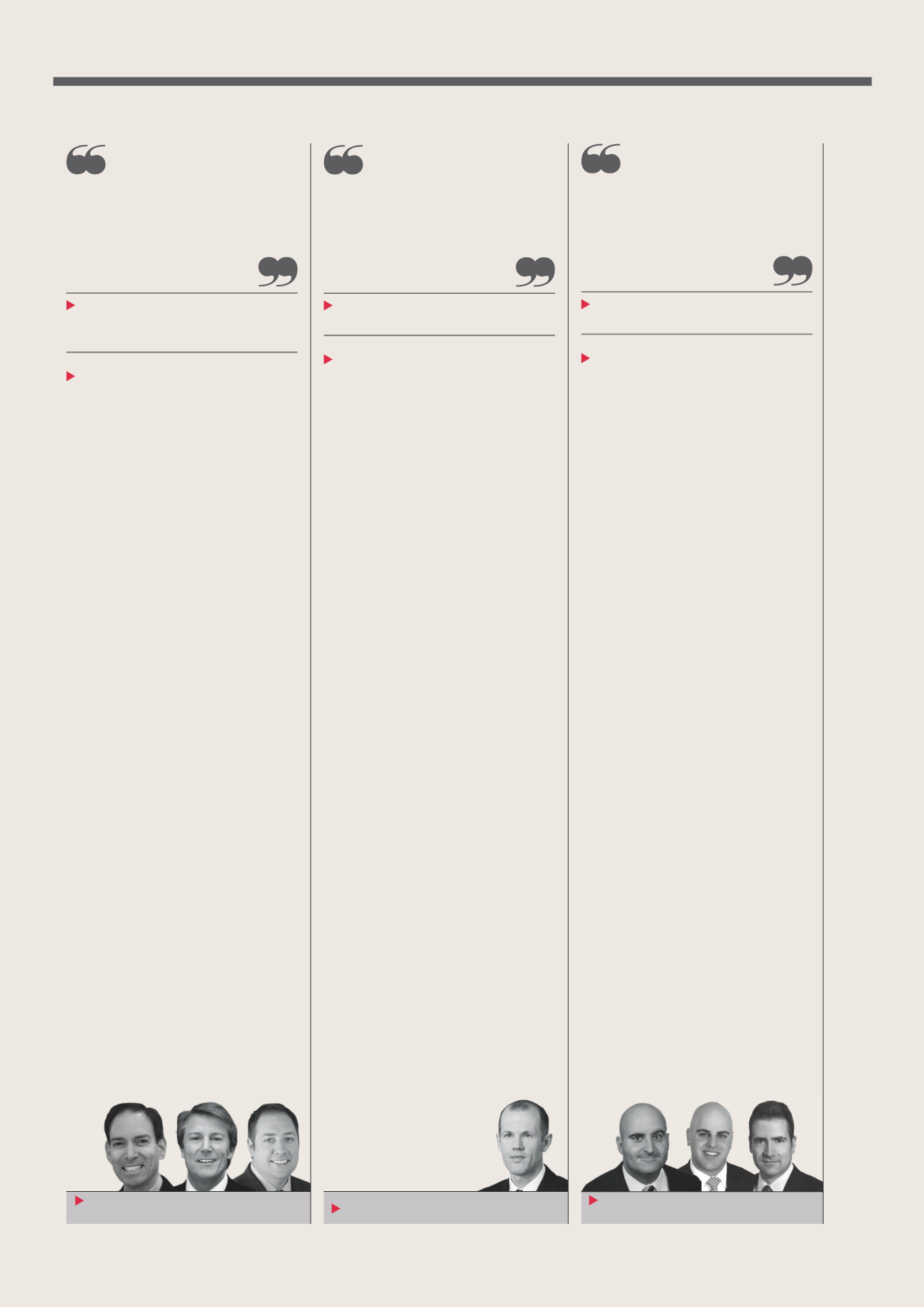
Nick Purves
David Levanson, Sunil Thakor and
Perry Williams
Scott Weiner, Brian Matthews and
Brad Boyd
38
|
THE INVESTOR