



 40 / 44

40
|
THE INVESTOR
THE INVESTOR CENTRE
All information correct as at 31 March 2016
S. W. MITCHELL CAPITAL
Continental European
Joint manager: Greater European
and Greater European Progressive
Q4 investment results beat or in line
with expectations
Company results
support our viewof
European recovery
STEWART INVESTORS
Worldwide Opportunities
Investment team looks at marketing
expenditure when reviewing accounts
Businesseswith strong
brands have often
understatedprofits
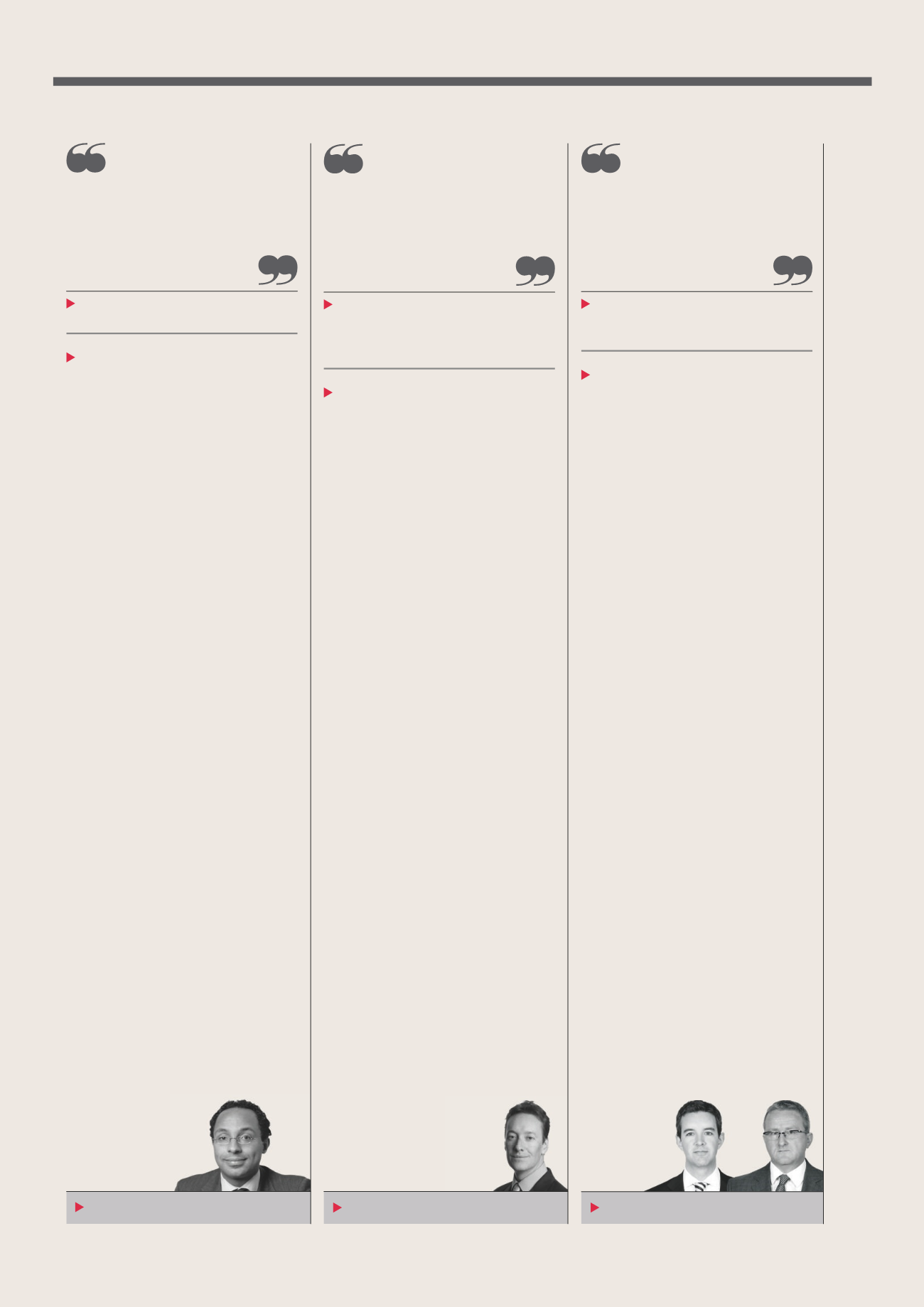
Stuart Mitchell
TWENTYFOUR
Joint manager: Diversified Bond and
Strategic Income
European fixed-income markets
weak, providing potential value
Global sentiment
overwhelmedby a
deluge of uncertainty
Eoin Walsh and Gary Kirk
T
he current round of company
results has supported our positive
view that the European economy
continues to recover. In fact,Q4
results from our investments generally
beat or came in line with market
expectations.Among our growth
stocks, Eurofins and SAP significantly
exceeded estimates.More
surprisingly, perhaps,were the notably
strong figures fromCommerzbank
and Intesa in the banking sector.
Many investors fear that the
slowdown in the Chinese and
American economies will undermine
the nascent recovery in the European
economy. But, as yet,we see little sign
of this from our extensive meetings
with company management teams.
Almost 40% of the portfolio is
made up of growth companies with
strong long-term growth drivers.
Telecom companies represent a
further 13% of the fund.Our most
significant cyclical exposure remains
with banks which constitute 18% of
the
fund.Wealso remain significantly
invested in the UK housebuilding
industry (12% of the fund), which
continues to enjoy buoyant demand
and limited cost inflation.
I
t is difficult to remember a more
sombre start to any year,with
sentiment overwhelmed by a deluge of
uncertainty regarding global growth
and increasing geopolitical fears.
Commodities sold off aggressively for
the first six weeks of the year,with oil
falling below $28 per barrel, the Dow
Jones declining 10% and heavy falls in
broader equity and fixed-income
markets.The European banking sector
saw euro high-yield financials falling
almost five points and additionalTier 1
(AT1) bonds down over 10
points.UKmarkets also struggled as the Brexit
referendumwas confirmed.
A degree of rationality appeared in
mid-February, helped by central bank
rhetoric and actions that led most
markets to bounce off their lows.The
firmer sentiment was boosted by the
ECB announcement of an extension of
QE and additional liquidity measures
to help banks.The Federal Reserve
released a dovish set of Federal Open
Market Committee minutes, which
helped US equity markets to retract
all their previous 2016 losses. But
European fixed-incomemarkets remain
weaker compared to year-end levels:
investment opportunities for credit look
attractive on the basis of relative value.
T
he team often discusses situations
where accounting profits or losses
may not be a true representation of a
company’s operations.
Consider the way that companies
used to be able to expense certain
costs, such as the cost of acquiring a
new client.This would be expensed in
the year the new client signed up,
although the newly acquired client
could be on the books for
years.Asa
result, the business might record an
accounting loss in the first year.Now
the costs associated with that
acquisition can be expensed over the
length of time a company might
reasonably expect to retain that client.
Businesses with strong brands have
often understated profits due to the
treatment of marketing expenses. It is
as uncomfortable a topic for those in
marketing as it is for accountants.
American marketing pioneer John
Wanamaker observed:‘Half the money
I spend on advertising is wasted; the
trouble is I don’t knowwhich half.’
Accountants have decided that we
should account for it all as waste.
Successful brands such as Unilever,
which spent €8 billion on marketing
in 2015, have shown that some of the
money spent has created enduring value.
Jonathan Asante