



 6 / 44

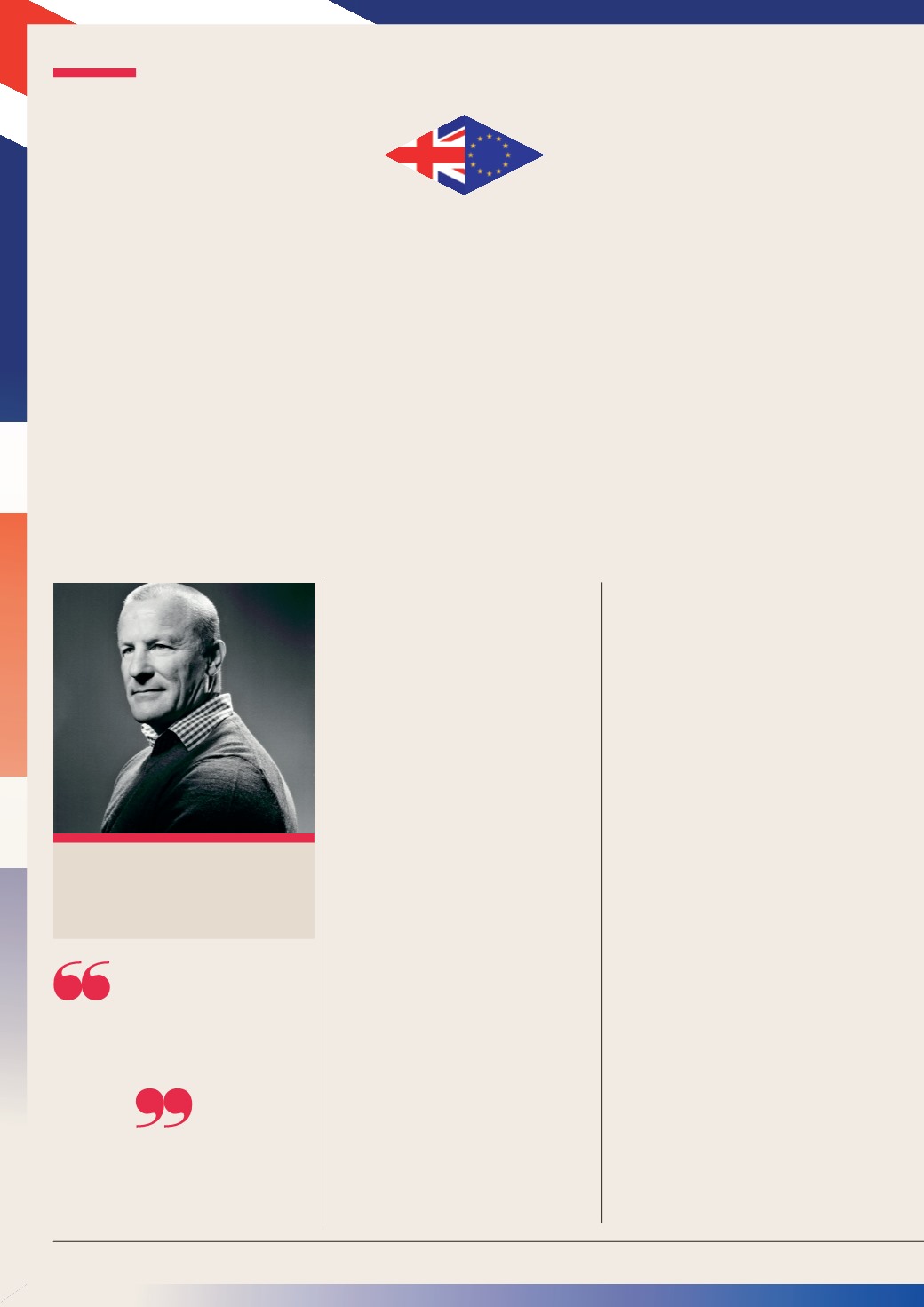
The referendum vote against the UK’s membership of the European
Union sparked significant turbulence in financial markets.
Neil Woodford, a UK fund manager, and Stuart Mitchell, a European
fund manager, give us their views on what this means for investors
ANALYSIS
W
e have been clear
in our thinking
on the economic
implications of
Brexit for some
time.The independent report that we
commissioned on the subject concluded
that the UK’s long-term economic future
would be largely una ected by a decision
to leave the European
Union.Westand by
these conclusions.
That is not to say there won’t be
challenges in the near-term.There will.
We now face a period of uncertainty as
the exact terms of the UK’s exit from
Europe are negotiated. But the long-term
economic path for the UK economy,
and indeed the global economy, will be
uninterrupted by what has happened.
With a bit of time and distance, I think
people will take a more measured
view that it is not going to change the
fundamental trajectory of the UK
economy over the next three to ve years.
What will happen next for the world
economy is that growth will continue
to slow.That has to be a headwind for
corporate pro ts. Commodity prices will
remain weak and China is going to slow
– indeed we think it is slowing already,
despite the extra stimulus we have seen.
In the UK, we are probably going to see
the economy slow a bit more than we
would have seen had the vote not taken
place, but I do not expect a recession.
I think this is a watershed moment for the
whole of Europe. It is not just a narrow,
UK-centric thing.
I believe the continuing in uence
coming from Brussels and the ever-closer
union advocates are going to be in retreat
now across Europe. If Europe is going to be
able to tackle the social, political and
economic challenges that it now faces,
there is going to have to be a profound
change of direction.
It is appropriate to remain optimistic
about a select group of equities that can
deliver high single-digit returns each
year over the next three to ve years.The
course of these businesses is broadly as
we thought it was before the UK voted to
leave. Consequently, the portfolio strategy
will not change. It was designed for a
challenging world, characterised by low
growth, de ation, debt problems, weak
productivity and troubling demographics.
If you accept what I am saying – that the
prospects are unaltered but prices are
lower – then by de nition that means
the investment opportunities are even
more attractive.
I think this is a
watershedmoment
for thewhole of
Europe
Neil Woodford
Income Distribution
UK Equity and UK High Income
06
|
THE INVESTOR