



 16 / 44

16
|
THE INVESTOR
ANALYSIS
Advances in prosthetics technology have the potential
to transform the lives of people across the globe
By SarahWoodward
E
ach time the Paralympic
Games come around, the
world is stunned, not just
by the skills and fitness on
display, but by the new
prosthetic technology that enables
competitors to run faster than most
people dream of.
Each individual sport poses different
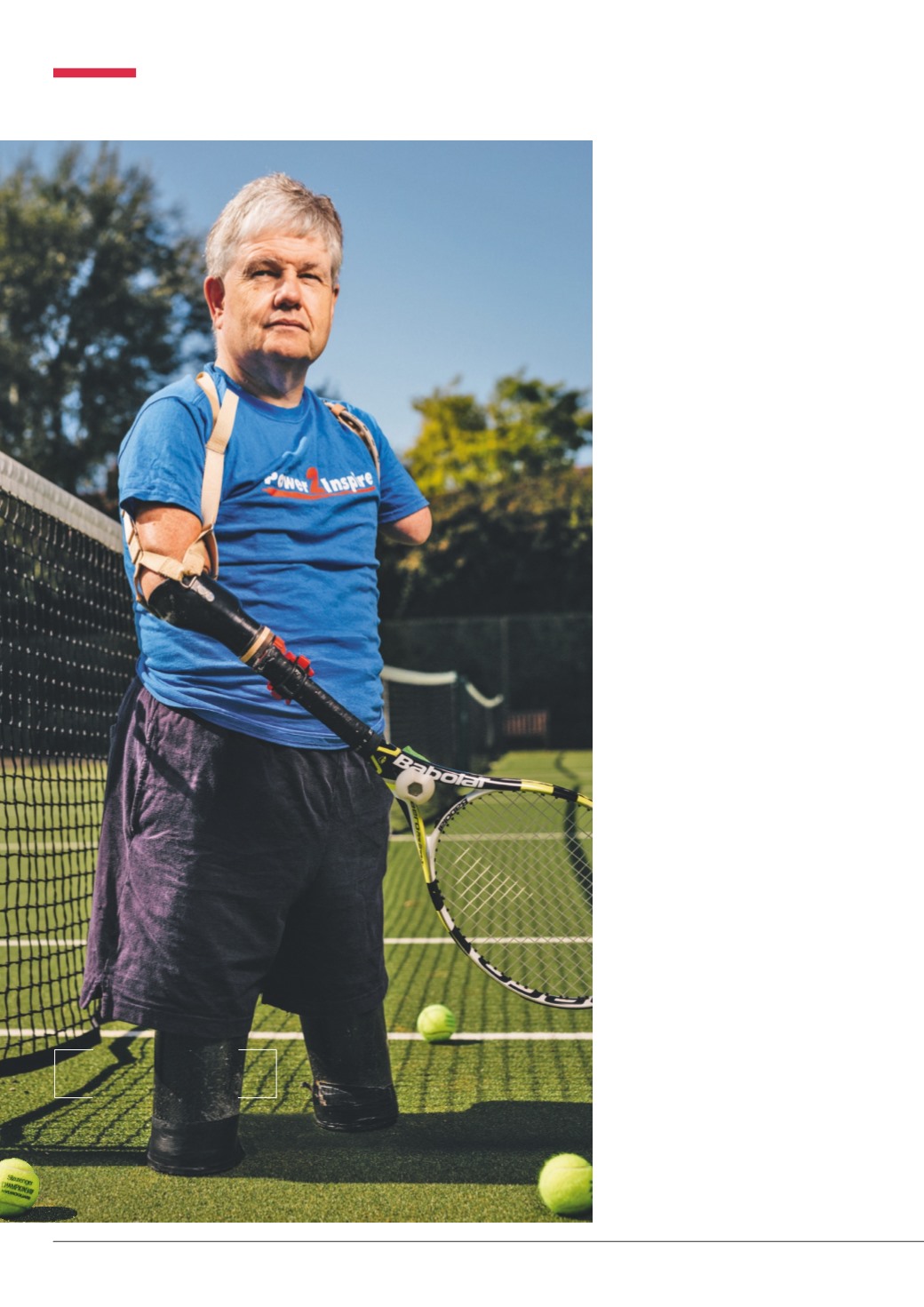
challenges, which is why JohnWillis
(left), a former lawyer who is now CEO
of Power2Inspire, set out to see whether
he could take part in every one of the 34
sports that feature in the Olympics and
Paralympics.Ashe was born without
forearms and lower legs, this required
ingenuity.Willis brought in Cambridge
Bio-Augmentation Systems (CBAS) to
help him his achieve his goal through
some clever engineering.
With funding from the John Stewart
Memorial Fund, CBAS has developed
a series of prosthetic applications for
people with similar body shapes, the
latest of which enabledWillis to go
kayaking.‘For the first time I was able to
join my family on the river rather than
watch from the bank,’ saysWillis.
As a condition of the funding, these
designs will be freely available online as
open source, to enable others to reproduce
them through 3D printing. Steve Morley
from Power2Inspire believes this is the
way forward.‘In the sporting world there
have been some amazing developments
in prosthetics, but they are also very
expensive.With access to a 3D printer,
the child who steps on a landmine in
Africa will soon be able to benefit from
these advances in technology.’
It is a hope that Professor Saeed Zahedi
of UK manufacturer of prosthetics and
orthotics, Blatchford Group, echoes. He
likens the rapid advance of the 3D printer
to that of the MRI scanner.‘Look at how
fast that technology has spread: just 15
years ago, an MRI scanner was a rarity
but now you see them in field hospitals.’
And, as his Managing Director and CEO
Adrian Stenson notes, given the number
of amputees inAsia alone:‘One thing we
are not short of is potential customers.’
prosthetics–
the future