



 17 / 40

R
arely can a major economy have
been described in more upbeat
terms by the OECD, the
Paris-based group of the
wealthiest nations, than India’s
was back in February. Not only
was India’s economic growth the highest among
the G20 countries, but the OECD forecast it
would grow at an annual rate of 8% for the next
two years. ‘The acceleration of structural
reforms, the move towards a rule-based policy
framework and low commodity prices have
provided a strong growth impetus,’ stated the
organisation’s update. It found poverty levels
across the country falling, inflation under control
and external risks low.
1
The Indian economy, under the stewardship
of Prime Minister Narendra Modi, is still
surging. But during the course of the year at
least some of the shine has come off the
OECD’s predictions. India’s domestic economy
grew by a reduced 6.1% in January to March
(annualised) – its slowest pace since late 2014 –
and this was followed by a cut in central bank
interest rates inAugust.
This dent in the economic outlook came from
an unexpected quarter. Late last year, Modi’s
government suddenly withdrew all 500 and 1,000
rupee notes, amounting to 86% of the currency
in circulation.The demonetisation policy was
aimed at tackling corruption and the black
economy, but the move was poorly planned.
Banks faced severe cash shortages, hitting small
businesses and poor people in rural areas.
2
Long associated with red tape and
corrupt officials,India’s economy
is being transformed by Narendra
Modi’s financial reforms.But
growth is slowing:do underlying
problems still need to be addressed?
By Brian Groom
INDIA RISING:
AWORK IN
PROGRESS
THE BIGGER PICTURE
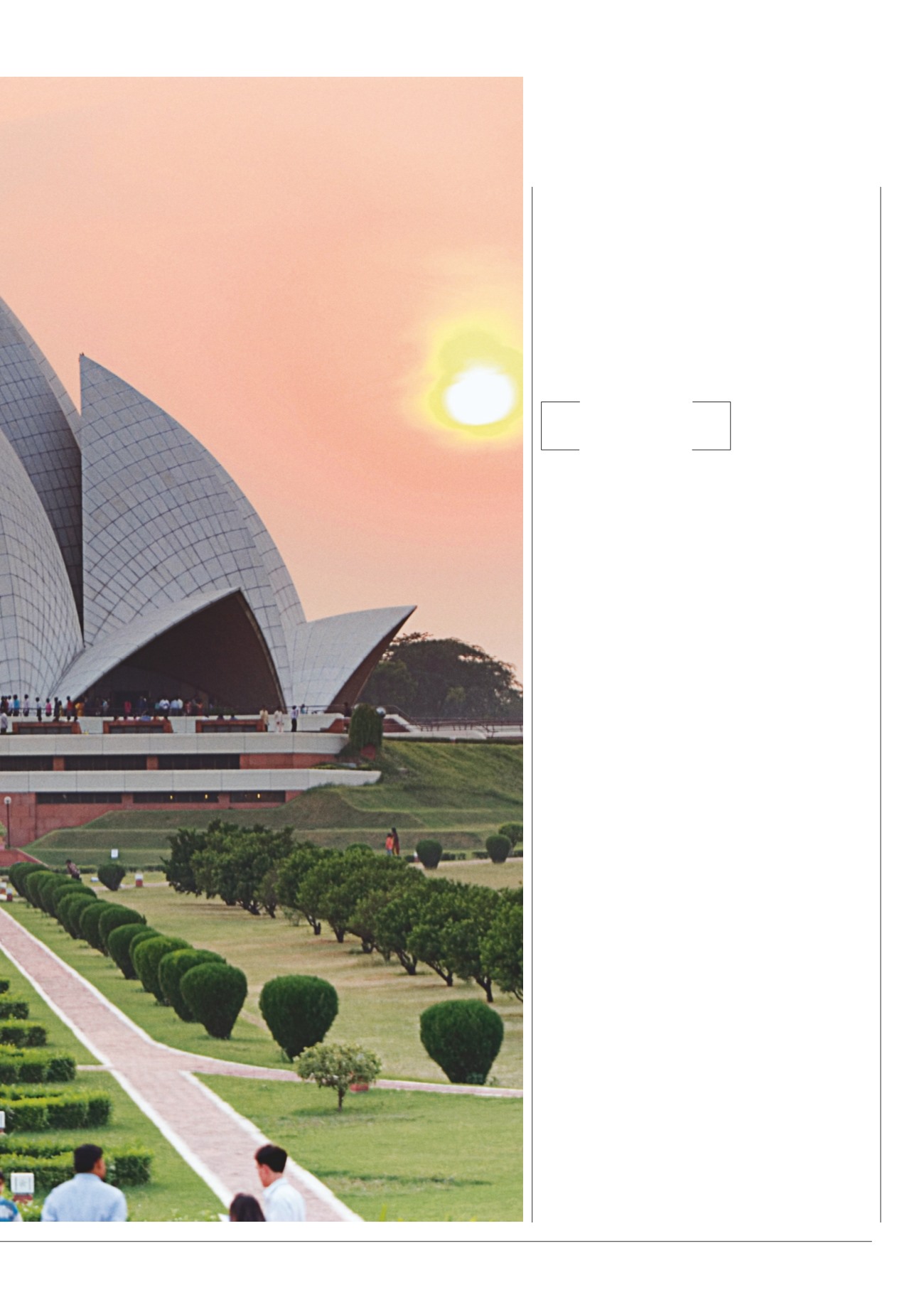
New Delhi’s Lotus
Temple welcomes
all faiths, but Prime
Minister Modi’s
Hindu nationalism is
causing tensions
THE INVESTOR
|
17
INDIA