



 13 / 44

THE INVESTOR
|
13
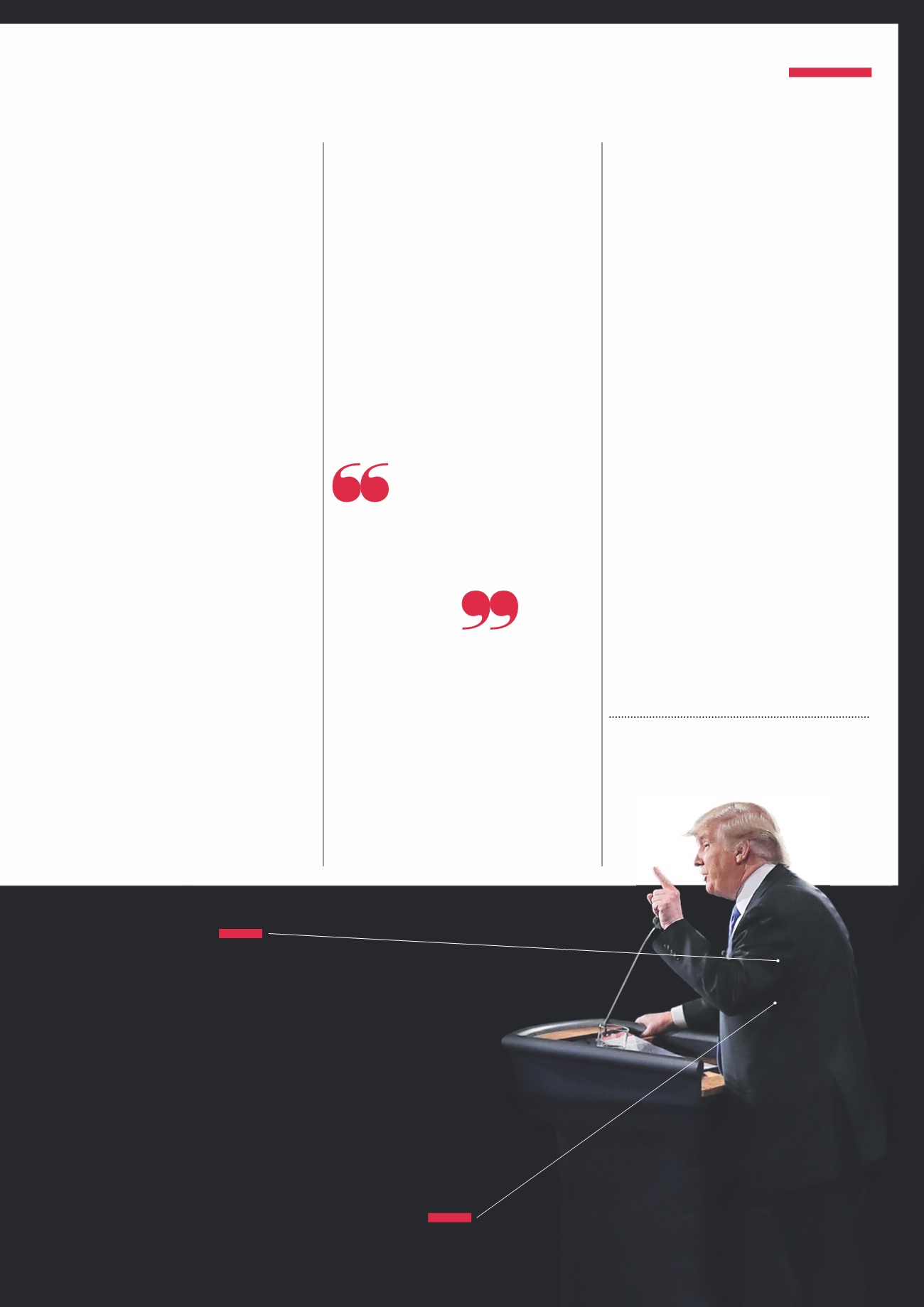
Proposed new
top rate of tax at
33
%
on incomes above
$154,000
a year
1
Pledged
to reduce
corporation
tax to
15
%
1
1 bbc.co.uk, September 2016. 2 hillaryclinton.com
RonaldReagan’s second victory,shares rose
by 26% the following year, there has only
been one bad year following a presidential
election; the 13% fall in the markets in
2001 that came after GeorgeWBush’s first
success in 2000.Both theObama wins were
followed by big stock-market gains; 23% in
2009, and an even more impressive 30%
four years
later.Incontrast,four presidential
elections from 1968 to 1980 were followed
by significant losses the following year
1
.
John Higgins, an analyst with Capital
Economics, suggests this tells us more
about prevailing economic conditions than
market approval or disapproval for the
election outcome. So the solitary bad
post-election year in recent times, 2001,
mainly reflected the bursting of the
dotcom bubble and the 9/11 attacks on
America.The big gains of 2009 were less a
vote of confidence in Obama than a
rebound from the market crash of 2008.
‘We are not forecasting an imminent
recession in the US and do not consider that
its stock market is particularly overvalued,’
said Higgins.‘We doubt that the outcome
of the election will send equity prices into
a tailspin,whatever the result.’
The other possible source of reassurance
is the US Federal Reserve.Trump accused
the Fed of favouring his opponent by not
raising interest rates in election year. Janet
Yellen, the Fed Chairman, has though
made it clear that a rate hike in December
is on the cards.That could also be delayed if
the election result is viewed by the Fed as
destabilising.Inanother echo of the Brexit
vote,the resultmaymatter less to themarkets
than its implications for the bank rate.
That said, this is a highly unusual election.
Never before in modern times have
investors had to assess the implications of a
candidate from so far outside the political
mainstream. Nor has it been easy to pin
down theTrump policy agenda.There are,
however, clear differences between him and
Clinton. She would raise taxes on the very
highest paid,with a new 43.6% tax bracket
on incomes above $5million a year, up from
39.6
%now.He, in contrast,would bring
down the top rate of tax to 33%.Under
Trump, that new top rate would kick in at
$154
,000.Hehas also pledged to reduce the
corporation tax rate from35% to just 15%.
The effects on the US budget deficit could
be dramatic.The independentTax Policy
Center calculates Trump’s programmewould
reduce tax revenues by $9,500 billion over
a decade (theTrump camp admits to less
than half of that amount), while Clinton’s
would boost them by $1,100 billion
2
.
Even more striking are the differences
on trade policy.While Clinton has wobbled
on trade,Trump has been explicitly
protectionist. Clinton has stated that the
Trans-Pacific Partnership (TPP), the
Asia-Pacific trade deal negotiated under
Obama, is not the best deal for the US.
Trump, however, with his proposal for a
35% tariff on imports fromMexico and
one of 45% on imports fromChina, would
– if he carried out his threats – fire the
opening shots in a new and potentially
dangerous trade war.
ATrump presidency, coming when
world trade is weak anyway – theWorld
Trade Organization estimates world trade
growth of under 2% this year
3
, the weakest
since the global financial crisis – could
plunge the world into a new protectionist
age. Even if his bark is worse than his bite,
and even if the checks and balances of the
US political system prevent him from
doing all he says he wants, that may be
something for investors to think about.
Trump’s tax policy
would reduce revenues,
while Clinton’swould
boost them
1 Capital Economics, September 2016
2
bbc.co.uk,September 2016
3
wto.org, September 2016
Balance sheet
The markets would seem to prefer
a Clinton victory; the prospect of Trump occupying
the White House brings uncertainty. Either way, a US
recession is not considered a likely outcome.
2016 US PRESIDENTIAL ELECTION
ANALYSIS