



 17 / 44

Both, though, worry about the lack
of trained technicians in developing
countries to fit the products.‘In Nigeria
we are told there is just one highly
trained prosthetist at the moment,
whereas in the UK, there are more
than 250 dedicated prosthetists out
of a prosthetic and orthotic workforce
of nearly 1,000,’ says Prof Zahedi.
Blatchford is involved in a project
to provide factories of the future,
which will make the supply chain
more efficient.‘It’s early days,’ says
Stenson,‘but in the long run we need
to change the whole philosophy of the
way we provide prosthetics alongside
the technology.’
Prof Zahedi leads the engineering
team behind the first fully integrated
limb system, the Linx, which was
described in a recent award citation
as ‘the platform technology for the
beginning of the next generation of
prosthetics’.The Linx enables
communication between knee and
ankle via microprocessors, making
everyday activities such as walking the
dog on a sandy beach, descending a steep
slope or even just standing for three hours
at a concert, possible.‘It is the ability to
perform these simple tasks without pain
or fear of falling, as much as the ability
to run and jump, that users crave,’ says
Prof Zahedi.
But if ever more sophisticated
prosthetics are under development, the
way they are attached to the body has
changed little since the SecondWorld
War. It is this which the young team of
Cambridge PhD students at CBAS
intend to
revolutionise.Asone of the
company’s two founders, Emil Hewage,
explains, they are currently trialling a
permanently integrated medical device
that will provide a standardised way
prosthetic arm that allows the user to
wiggle their fingers.
Prof Zahedi’s vision is for an artificial
limb that you can keep on in the shower
without needing to change your
prosthesis and without pain.‘It will be
widespread one day,’ he says.‘It’s slow in
coming because we have to work harder
to convince the investment community,
government-funding agencies and
insurers of the cost benefits of these
developments. But just by reducing the
risk of falling, we reduce the burden on
the health service. In the end, users’
needs don’t differ, just their ability to pay.’
So the challenge remains to make the
impressive developments in prosthetic
technology
affordable.AsHewage says:
‘I used to work on research for racing
cars, including prototype electric
vehicles and Formula 1. One carbon
running blade currently costs more than
we would spend building the chassis of
three prototype cars.’
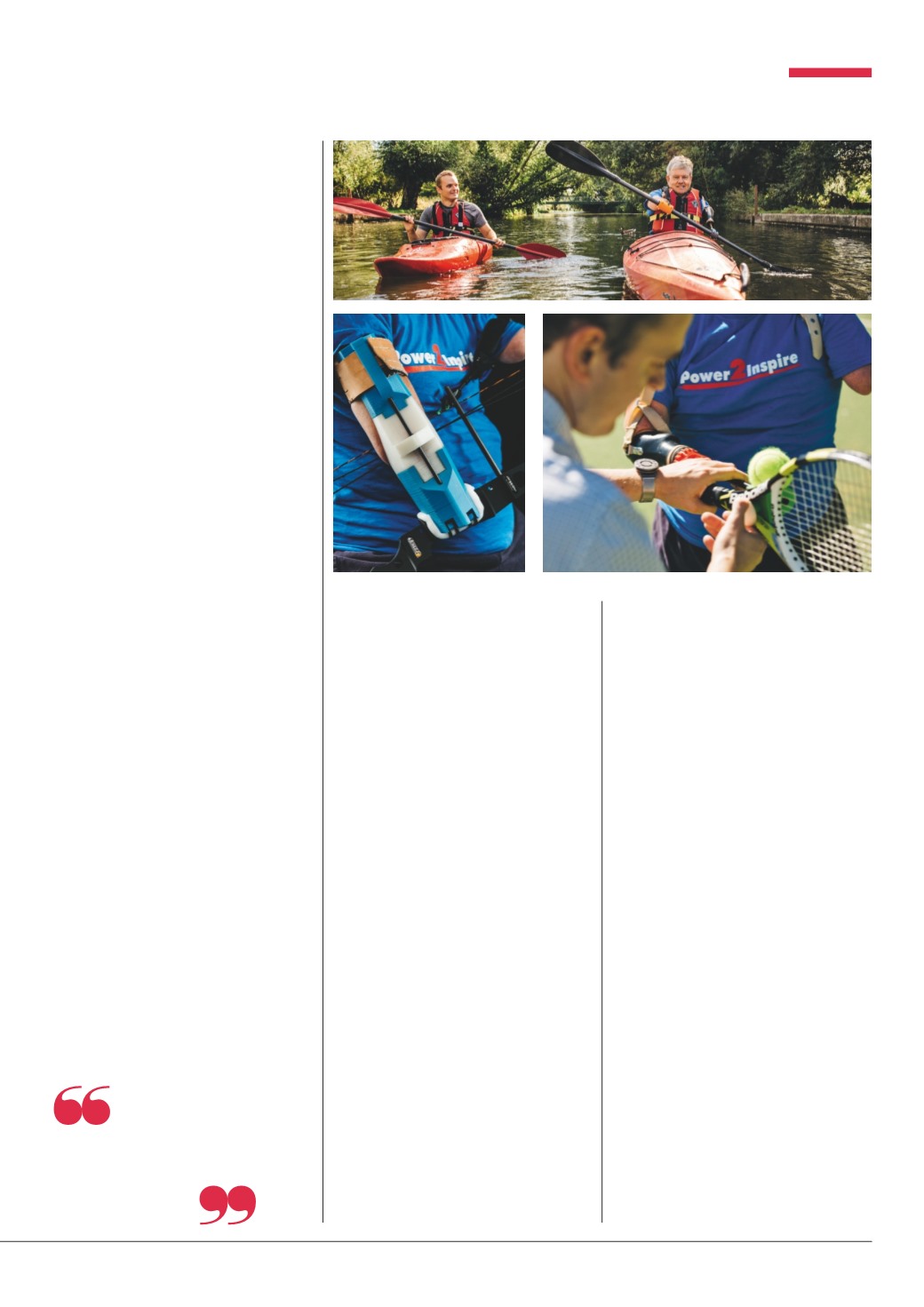
Not every amputee wants to run in
the Paralympics.They just want to be
able to walk on the beach or pick up
a tennis racquet and now the technology
is there.The future is to make it
accessible to everybody.
THE INVESTOR
|
17
of connecting prosthetics.‘Think of it as
an open standard USB connector for
prosthetic technology,’ says this expert
in computational neuroscience and
machine learning.‘It really is as simple as
plug ‘n’ play. Our dream is that one day
users will be able to go onAmazon and
order a limb that suits their needs.’
Those needs vary aesthetically as well
as practically, and the latest techniques
are allowing a new wave of design beyond
functionality.Art, sculpture and prosthetics
have a long relationship, as celebrated in
the recent
The Body Extended
exhibition
at the Henry Moore Institute in Leeds.
Once, the biggest cosmetic challenge was
colour-matching the prosthetic limb to
the individual’s skin tone.Today’s
younger users are looking to customise
the appearance of their limb, whether
that is covering it in embroidered leather
or adorning it with tattoos.
Meanwhile, researchers at Stanford
University in the US are working to
create prosthetic skin that will allow
a person to sense touch and pressure.
And at Johns Hopkins University
in Baltimore, physicians and
biomedical engineers report the first
successful trials of a mind-controlled
Users’ needs don’t
differ, just their
ability to pay
Greg Funnell
FUTURE TECHNOLOGY
ANALYSIS