


 10 / 40

10
|
THE INVESTOR
25TH ANNIVERSARY
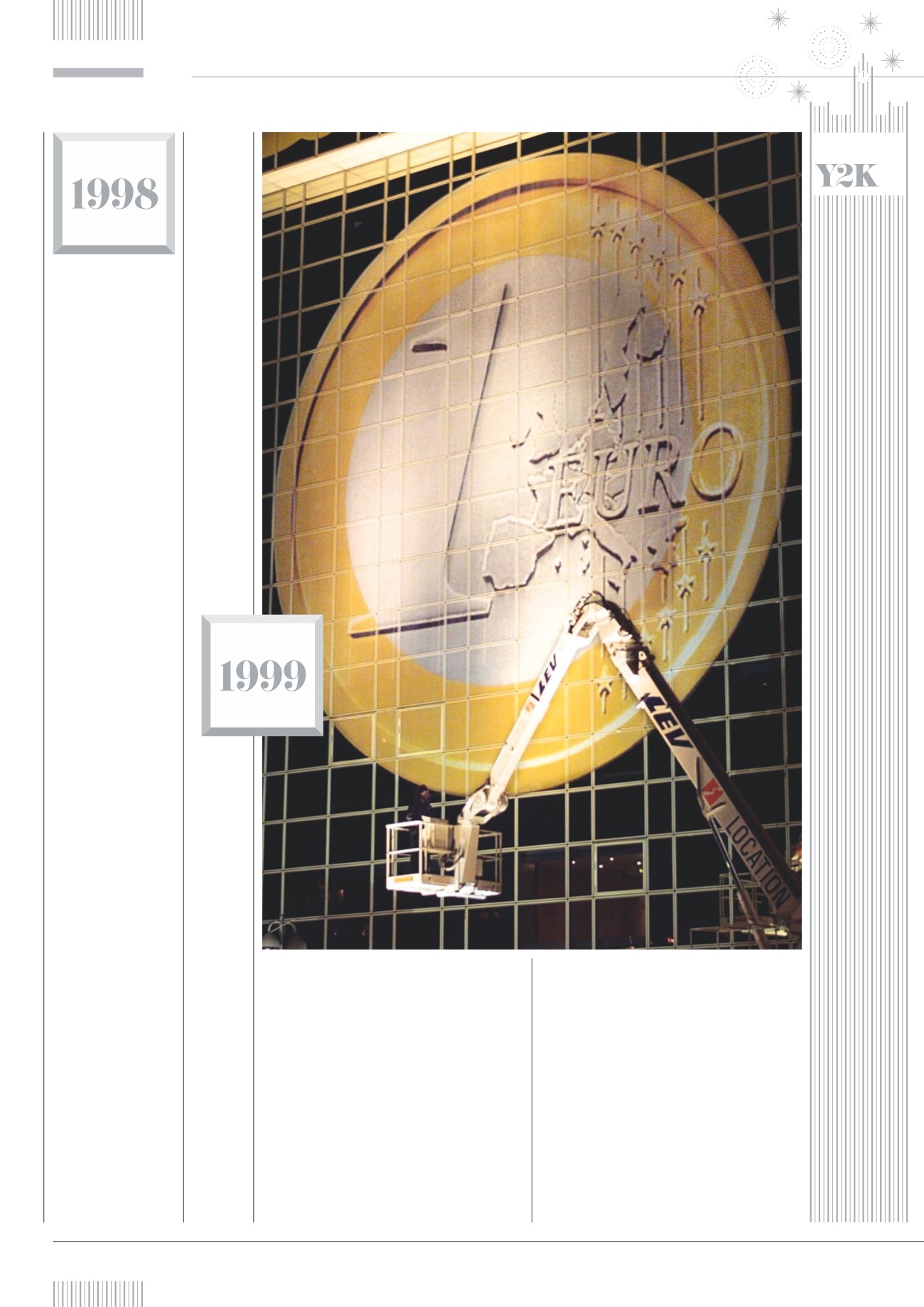
1 January 1999
The euro was initially
launched as an accounting currency;
physical notes and coins were introduced
three years later and member states’ local
currencies, such as the franc and peseta,
were abolished in July 2002. Only 11 of
the 15 EU members at that time joined
the euro, with the UK and Denmark
among those opting out.The original
11 have since been joined by eight
others, most recently Lithuania in
2015.Within the eurozone, monetary
policy is set by the European Central
Bank, with the objective of maintaining
price stability.While economic policy
remains under the control of member
states, they must work together to meet
the eurozone’s common objectives of
stability, growth and employment.This
one-size-fits-all policy was one of the
factors precipitating the euro crisis as
the weaker southern states struggled
with austerity budgets and low growth.
That led to fears of a euro break-up;
while these have receded, they have not
completely disappeared.
After 30 years
of conflict,and
thousands of
deaths and
injuries,The
Troubles finally
came to an end
10 A
pril
1998
The Good Friday
Agreement was
signed by Tony Blair
and Irish Taoiseach
Bertie Ahern, ending
30 years of sectarian
conflict in Northern
Ireland. It was
ratified the following
month after
referendums across
Northern Ireland and
Eire. The agreement
saw the creation of:
the democratically-
elected Northern
Ireland Assembly;
the North South
Ministerial Council;
and the British-
Irish Council and
British-Irish
Intergovernmental
Conference. It proved
challenging to
implement, however,
and was amended by
the St Andrew’s
Agreement in 2006.
GOOD FRIDAY
AGREEMENT
REFERENDUM
RESULTS
1
NORTHERN IRELAND
676,996
FOR
274,879
AGAINST
71.12
%
IN FAVOUR
THE REPUBLIC
1,442,583
FOR
85,748
AGAINST
94.39
%
IN FAVOUR
EUROVISION
Historic currencies are abolished as the
euro paves the way for economic union
1 ark.ac.uk, December 2016