



 11 / 40

THE INVESTOR
|
11
BREXIT
as many different parts of the economy as possible.
Not everyone’s needs will be satisfied, but fewwill be
ignored.There will, however, be winners and losers.
A draft official document leaked to
TheTimes
in
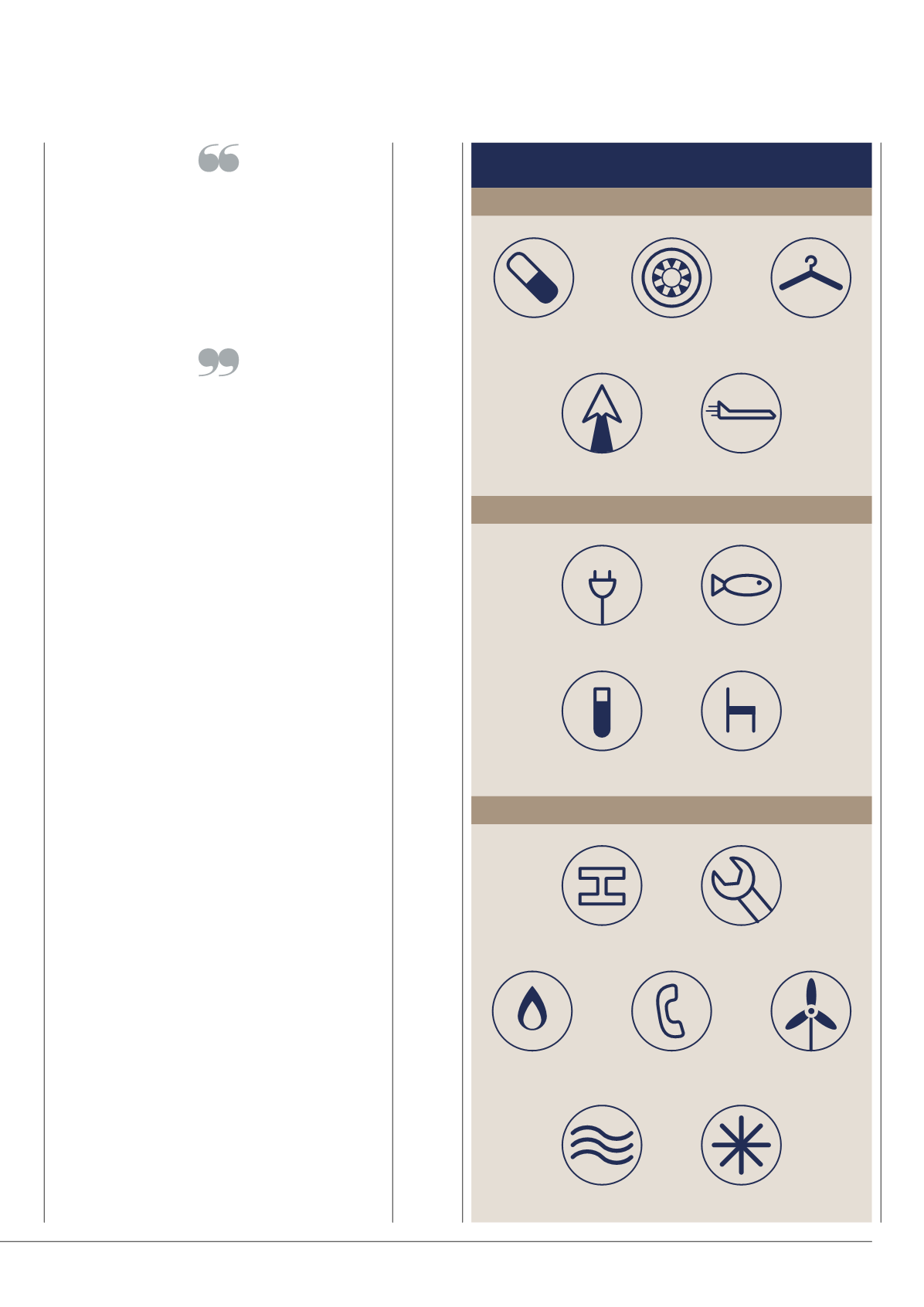
February revealed the government’s priorities. High-
priority sectors post-Brexit included pharmaceuticals,
car manufacturing, textiles and clothing, aerospace
and air transport.Medium-priority sectors included
electronics,fisheries, chemicals and furniture,while low-
priority sectors included steel, construction, oil and gas,
telecoms, environmental services,water and healthcare.
The government insisted that this was only an early draft.
Ministers are aware,moreover, that the coming
years will see the emergence of innovative new
sectors.They can be encouraged by means of greater
cooperation between universities and businesses, and
by the provision of seed capital, but they do not lend
themselves to detailed advance planning.
With the right policies and strategy, however, the
UK could succeed over the long term, according to
accountancy firm PricewaterhouseCoopers (PwC).
Its recently updated version of
TheWorld in 2050
said
that if the country remains open to skilled and talented
workers, and develops successful trade links with
fast-growing emerging economies, it could achieve its
long-term growth targets.
The report predicts growth in the UK of nearly
2% a year in coming decades, faster than other G7
countries. Its projections suggest that in both 2030 and
2050 the UK and Germany will be the only European
economies in the world’s top 10.
According to John Hawksworth, PwC’s Chief
Economist:‘Our positive long-term growth projection
for the UK is due to favourable demographic factors
and a relatively flexible economy by European
standards.However, developing successful trade
and investment links with faster-growing emerging
economies will be critical to achieving this, offsetting
probable weaker trade links with the EU after Brexit.’
The ball is in the UK’s court.
Not everyone’s needs
will be satisfied, but
fewwill be ignored.There
will, however, bewinners
and losers
pharmaceuticals
oil and gas
aerospace
water
electronics
chemicals
steel
textiles and
clothing
environmental
services
car
manufacturing
telecoms
air transport
healthcare
fisheries
furniture
construction
POTENTIAL GOVERNMENT GROWTH PRIORITIES
HIGH PRIORITY
MEDIUM PRIORITY
LOW PRIORITY